
Microscopic Varicocele
- What Is a Varicocele?
- Why Is It Important to Recognize Varicocele?
- Who Is Most Likely to Develop a Varicocele?
- How Is Varicocele Diagnosed?
- Does Varicocele Cause Pain?
- How Does a Varicocele Cause Infertility?
- How Is the Severity of Varicocele Assessed?
- If a Varicocele Is Detected Following a Physical Examination, What Further Evaluations Are Necessary?
- Which Varicose Veins Require Treatment?
- Which Varicoceles Do Not Require Treatment?
- How Is Varicocele Treated?
- How Is Post-Treatment Monitoring and Follow-Up Conducted After Varicocele Diagnosis and Treatment?
What Is a Varicocele?
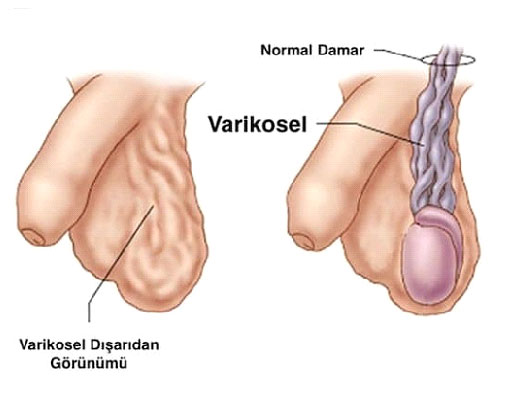
Varicocele is the term used to describe the enlargement and dilation of the veins that drain blood from the testicles.
Why Is It Important to Recognize Varicocele?
It is important for us urologists to note that varicocele is present in nearly half of the people who seek treatment for infertility and that this condition is among the treatable causes of infertility. Furthermore, it has been shown that among individuals who have previously had children but are unable to conceive a second time (secondary infertility), varicocele is present in at least 8 out of every 10 cases.
A varicocele, which is usually observed on the left side of the body but can occur on either side, can negatively affect testicular size and function
Who Is Most Likely to Develop a Varicocele?
Varicocele is commonly observed in people whose conditions cause increased intra-abdominal pressure or who work in professions—such as teachers and police officers—that require them to stand for long periods of time
How Is Varicocele Diagnosed?
Varicocele is diagnosed through a physical examination. Color Doppler ultrasound is only necessary for patients where the physical examination leaves us with doubts (such as in cases where the patient has previously undergone surgery and the success of the procedure is in question, or when there are factors that make the physical examination difficult).
Does Varicocele Cause Pain?
Although this condition typically presents as visible or palpable swellings, it actually rarely causes pain. However, it is a widely accepted fact in the medical community that pain complaints associated with this condition are extremely rare, and for this reason, surgery is not recommended for patients.
How Does a Varicocele Cause Infertility?
There is still no definitive information on why varicocele causes infertility, but there are various theories regarding the causes of these negative effects. The two most widely accepted of these theories are as follows:
⦁ As you may have noticed, the testicles are organs located outside the body. When the weather is cold, these organs try to increase their temperature by causing the scrotum (the sac surrounding them) to contract and by moving upward; when the weather is hot, they try to place themselves entirely outside the body in a cooler environment by causing the scrotum to relax completely. Because a varicocele increases temperature, this regulatory mechanism loses its effectiveness.
⦁ Because these substances can no longer be completely cleared from the testes, nutritional deficiencies develop, leading to a reduction in testicular size and impaired semen parameters.
As a result, varicocele can lead to a reduction in testicular size and a decline in sperm quality. In such cases, these complications can be resolved by ligating the dilated veins.
While differences in testicular size may resolve completely in pre-pubertal patients following surgical treatment of varicocele, differences in testicular size generally do not resolve when varicocele that develops later in life is treated surgically. However, improvements may be observed in sperm parameters (sperm count, sperm motility, and the percentage of structurally normal sperm).
How Is the Severity of Varicocele Assessed?
Based on the findings from the physical examination and the ultrasound results, varicoceles are classified into four grades:
⦁ Subclinical varicocele: Dilated veins that cannot be detected during a physical examination but can only be visualized on an ultrasound
⦁ Grade 1 varicocele: Enlarged veins palpable during examination in situations that increase intra-abdominal pressure, such as coughing or straining
⦁ Grade 2 varicocele: Enlarged veins that can be felt during a physical examination without any manipulation
⦁ Grade 3 varicocele: Enlarged veins visible from the outside without any intervention during a physical examination
If a Varicocele Is Detected Following a Physical Examination, What Further Evaluations Are Necessary?
Following a physical examination, a semen analysis should be performed in individuals with unilateral varicocele.
If the semen analysis shows abnormal results, a second semen analysis must be performed to confirm the findings. In addition, patients with varicoceles in both testicles should undergo a retroperitoneal (the area between and behind the kidneys) ultrasound to ensure they do not have any conditions, such as a mass, that are compressing the major blood vessels within the abdomen.
Which Varicose Veins Require Treatment?
⦁ In prepubertal individuals and those unable to provide a sample for sperm analysis: When the volume of one testis is more than 10% smaller than that of the other
⦁ In adults or individuals seeking treatment for infertility: When the volume of one testis is more than 10% smaller than the other; or in individuals whose semen analysis shows a sperm count of less than 20,000,000, sperm motility of less than 50%, and abnormal sperm morphology in more than 50% of the sperm
Patients with Grade 2–3 varicoceles experience the greatest success from treatment. The lowest success rate is seen in cases of subclinical varicocele, and it is widely accepted in the medical community that these patients should not undergo surgical treatment.
In men who experience testicular pain and are diagnosed with varicocele following an examination, this pain is not necessarily caused by the varicocele. Therefore, other causes should be investigated first, and the patient’s symptoms should be treated before proceeding with treatment for the varicocele.
Which Varicoceles Do Not Require Treatment?
Men with normal semen analysis results, men with subclinical varicocele, or children with varicocele in whom no change in testicular volume has been detected do not require surgery.
Patients with testicular pain and varicocele should undergo surgery only after it has been determined that the pain is not caused by a condition other than varicocele, and after it has been observed that they do not benefit from pain relievers; the risks of the procedure should be discussed with the patient, and surgery should be performed only if the patient requests it.
How Is Varicocele Treated?
The most common and current treatment for varicocele is surgery. However, treatment can also be performed by administering various substances into the veins using angiographic techniques.
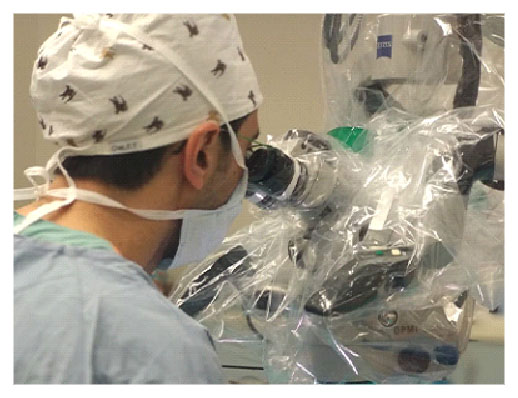
Varicocele surgeries are performed through an incision in the groin area. During the procedure, the veins leading to the testicles are located and ligated. The success rate is much higher when a microscope or optical magnifier is used, and the development of unwanted effects (complications) is rare.
Varicocele surgery takes about 30–60 minutes. The most common complications that may occur after surgery are hydrocele (fluid buildup around the testicle) and atrophy.
How Is Post-Treatment Monitoring and Follow-Up Conducted After Varicocele Diagnosis and Treatment?
Cases that do not require treatment should be monitored annually with a semen analysis and physical examination. For individuals undergoing treatment, improvements in semen analysis results take up to 6 months to stabilize.
Send Your Message