Urinary Incontinence
- What Is Urinary Incontinence?
- Is Urinary Incontinence a Common Condition?
- How Many Types of Urinary Incontinence Are There?
- Stress Urinary Incontinence (Stress Incontinence)
- Stress Urinary Incontinence
- Mixed-Type Urinary Incontinence
- Overflow Incontinence
- Continuous Urinary Incontinence
- Urinary Incontinence Surgeries
What Is Urinary Incontinence?
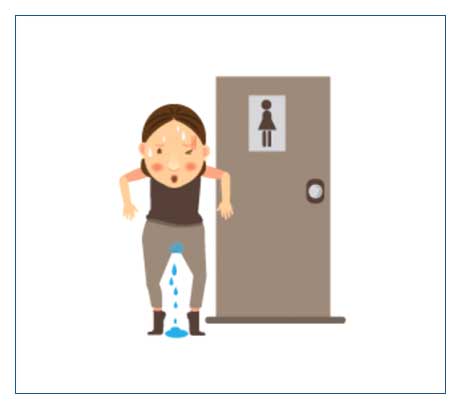
Urinary incontinence is the inability to control urination. Its medical term is urinary incontinence. Although it can occur at any age, it is more common in older adults. If it occurs repeatedly, it is considered a medical condition.
Is Urinary Incontinence a Common Condition?
Yes. It is a problem that affects more than 200 million people worldwide. It can be observed in 38% of women. Urinary incontinence is a health problem commonly seen in female patients in particular, and one that seriously disrupts people’s social lives.
Although patients suffer greatly from this condition, which occurs beyond their control, they often choose to hide their distress by citing hygiene or social reasons as excuses.
How Many Types of Urinary Incontinence Are There?
Urinary incontinence is classified into five different types based on the underlying cause and symptoms:
Stress Urinary Incontinence
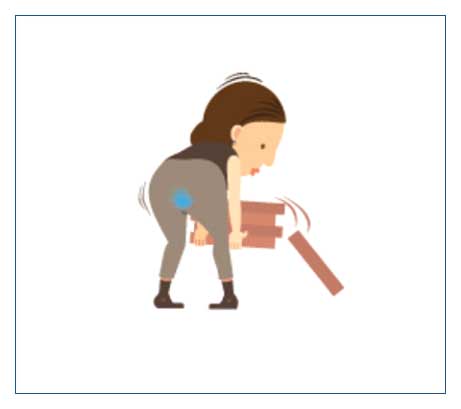
This is urinary incontinence that occurs during situations that cause an increase in abdominal pressure (coughing, sneezing, laughing, straining, heavy lifting, bending over, standing up, etc.).
This weakness may be caused by a previous difficult childbirth, multiple pregnancies, surgery for gynecological conditions, or menopause, among other factors
Mixed-Type Urinary Incontinence
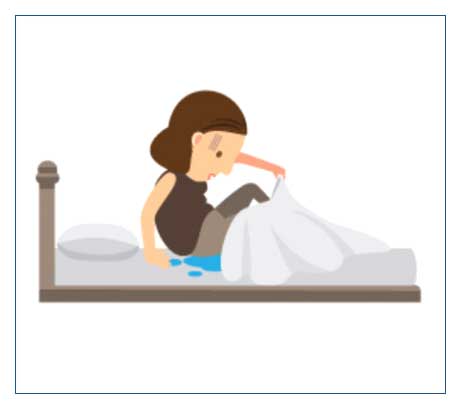
This is a condition in which both stress and urge urinary incontinence occur simultaneously.
Overflow Urinary Incontinence
This condition occurs when the volume of urine gradually increases—either due to a narrowing or blockage within the urethra (the tube that carries urine from the bladder to the outside) or because the bladder cannot contract and empty itself—and, once the pressure in the bladder reaches a sufficiently high level, urine leaks out, much like water spilling over the rim of a glass.
Continuous Urinary Incontinence
As a result of a structural abnormality in the patient or following a previous treatment such as radiation therapy or surgery
It is a condition in which urine continuously leaks from a hole in the bladder beyond the patient's control.
In addition to the separate occurrence of each of these types, it is also possible for more than one type to occur simultaneously in a single patient
Urinary Incontinence Surgeries
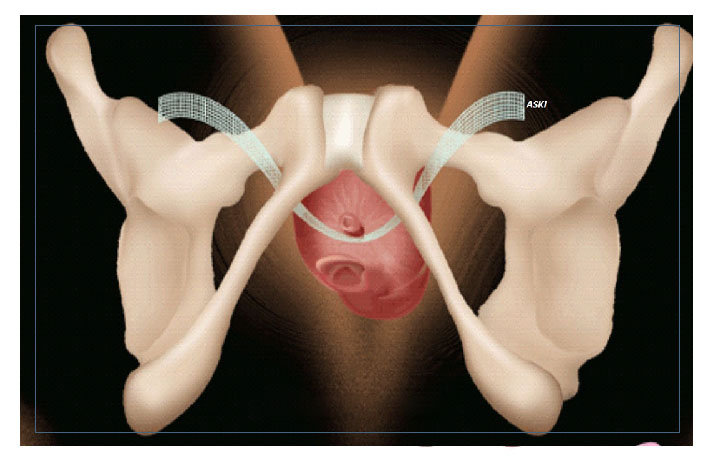
We have previously noted that the problem with stress urinary incontinence is the relaxation of the pelvic floor muscles. As a result of this relaxation, the bladder slips downward from its normal position, and the angle between the urethra and the bladder is compromised.
There are many treatment options available for this condition. Typically, the urethra is suspended upward using a non-absorbable suspension material.
Your doctor will select the most appropriate method for you.
Who Needs This Surgery?
To determine this, certain tests are performed. In addition to urodynamic studies, methods such as the Q-type test—in which a cotton swab is inserted into the urethra and the patient is asked to cough, and the angle between the bladder and the urethra is assessed based on the swab’s movement at that moment—as well as the Boney test and the pad test, are used for this purpose.
Patients found to have an overly mobile urethra are considered suitable candidates for surgery, as it is believed that their sphincter muscle bundles are insufficient for urine retention.
What Are the Risks of This Surgery?
One of the most common risks of the surgery is that it may fail and urinary incontinence may persist. This risk can be minimized by thoroughly evaluating the patient before surgery and choosing the appropriate procedure.
Send Your Message