
What Is Peyronie's Disease?
Peyronie's disease is a condition in which certain areas of the penis's inner lining—which normally stretches and expands during an erection—lose their elasticity. It is also known as penile calcification.
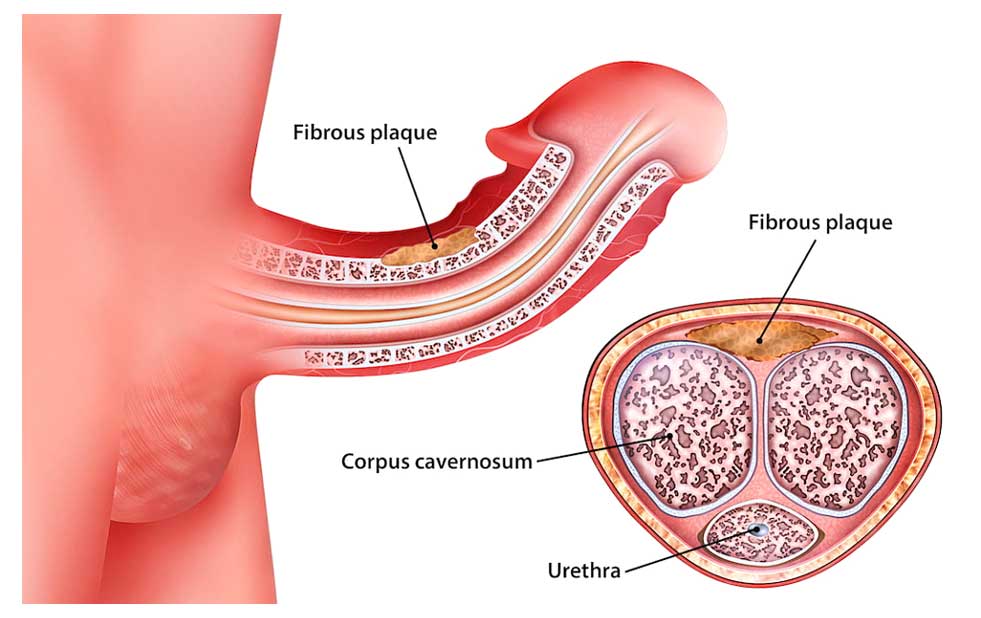
What Are the Treatment Options for Peyronie's Disease?
Certain medications—such as Potaba (vitamin E), colchicine, tamoxifen, corticosteroids, procarbazine, orgatein, NSAIDs, Seldane, and Allegra—may lead to an improvement of about 30–40% during the early stages of the disease.
Topical treatments—such as corticosteroids, verapamil cream, and beta-aminopropionitrile—may be used. However, the effectiveness of these treatments is debatable.
Intralesional injections of verapamil, interferon, collagenase, cortisone, parathyroid hormone, and prostacyclin may be administered.
ESWL (extracorporeal shock wave therapy): Although the exact mechanism of action is not fully understood, it causes direct damage to the plaque, leading to resorption through vascularization and cavitation. The most common side effects include hematomas and hemorrhage in the skin, as well as bleeding from the urinary tract. Surgical treatment should be preferred in cases where penile curvature exceeds 40 degrees, there is severe calcification in the plaque, or the patient desires rapid and effective treatment.
If the penis does not become sufficiently erect and there is difficulty penetrating the vagina, the condition should be corrected surgically. If these issues are normal, surgery is not performed.
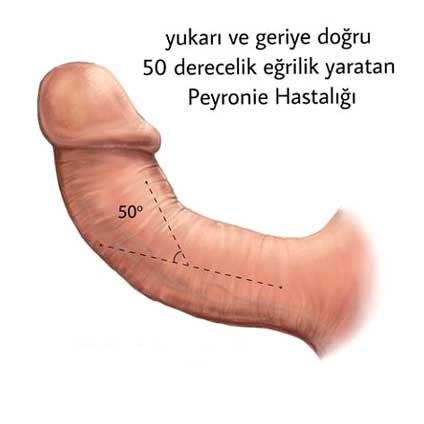 In cases where the curvature is mild and there are no erectile dysfunction issues, Nesbit or plication surgery should be performed. In cases where the curvature is severe and there are no erectile dysfunction issues, the patch method is used. In cases where the curvature is severe and there are also erectile dysfunction issues, penile prosthesis surgery is performed.