
Prostatitis
- What Is Prostatitis?
- Who Is Prone to Prostatitis?
- What Are the Symptoms of Prostatitis?
- What Causes Prostatitis in Men?
- What Are the Infectious Causes of Prostatitis?
- What Are the Anatomical Causes of Prostatitis?
- What Are the Trauma-Related Causes of Prostatitis?
- How Is Prostatitis Diagnosed?
- How Is Prostatitis Treated?
- How Many Types of Prostatitis Are There, and What Are They?
- What Is Acute Bacterial Prostatitis (Category 1)?
- What Is Chronic Bacterial Prostatitis (Category 2)?
- What Is Chronic Nonbacterial Prostatitis (Category 3 – Chronic Pelvic Pain Syndrome)?
- What Types of Medications Are Prescribed for Chronic Nonbacterial Prostatitis (Category 3 – Chronic Pelvic Pain Syndrome)?
- Is There a Role for Surgical Approaches in Chronic Nonbacterial Prostatitis (Category 3 – Chronic Pelvic Pain Syndrome)?
- What Is Asymptomatic Inflammatory Prostatitis (Category 4)?
What Is Prostatitis?
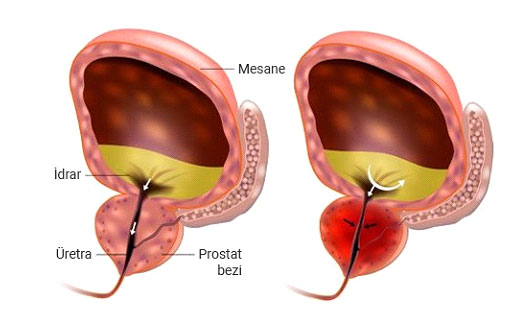
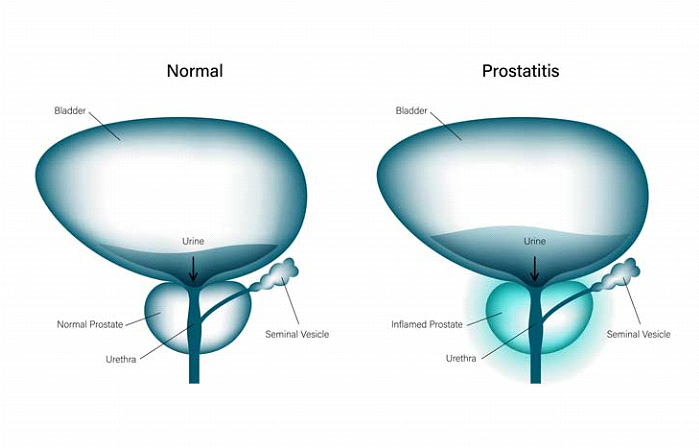
Prostatitis is a general term used to describe inflammation of the prostate gland. The inflammation may be caused by an infection or another factor that irritates the gland.
Who Is Prone to Prostatitis?
Although benign prostate enlargement and prostate cancer generally occur in older men, prostatitis is a condition that typically affects younger men.
It is the most common urological diagnosis in men under the age of 50. It is estimated that as many as 25 percent of men experience symptoms of prostatitis at some point in their lives.
Once it occurs, it may become permanent (chronic) or recur.
What Are the Symptoms of Prostatitis?
Patients’ primary complaint is usually pain. While the pain can originate anywhere in the genitourinary system (involving the urinary tract and genital organs) or in the pelvis (the area within the hips below the abdominal region), the most common sites of pain are the perineum (the area between the penis and the anus), the suprapubic region (above the bladder), the groin, the testicles, the penis, and the lower back. Pain or discomfort may be associated with ejaculation or urination.
Symptoms may include increased urinary frequency, a sudden urge to urinate, a burning sensation or difficulty while urinating, and a feeling that the bladder is not emptying completely.
It may be a fever accompanied by chills. It may also be accompanied by an inability to urinate, joint pain, and muscle pain. Sometimes, discharge may come from the tip of the penis as a result of the spontaneous drainage of an abscess in the prostate.
What Causes Prostatitis in Men?
Prostatitis can result from an infection caused by a microorganism, trauma, or certain anatomical conditions.
What Are the Infectious Causes of Prostatitis?
This condition, caused by one or more types of bacteria (sometimes microorganisms of the Chlamydia or Ureaplasma genera), generally occurs more frequently in young men who are sexually active. The microorganism responsible for this condition may not always be detected in tests and investigations.
What Are the Anatomical Causes of Prostatitis?
High-pressure urination occurs as a result of lower urinary tract obstructions. The high pressure caused by such an obstruction leads to changes in the flow characteristics of urine within the urethra. Urine, which may contain potentially harmful and toxic substances and/or microorganisms, can enter the prostate ducts. Anxiety and stress cause the muscle that controls urine flow to contract. These contractions prevent the muscles from relaxing regularly, causing urine in the urethra to flow back into the prostate and irritate the glandular tissue. Some men frequently pause and restart while urinating. Stopping the urine stream causes urine to flow backward, which in turn irritates the prostate.
What Are the Trauma-Related Causes of Prostatitis?
Repetitive trauma (which occurs in tractor, bicycle, and heavy-duty vehicle drivers) most likely affects the local perineal muscles and nervous system, and perhaps even the vascular system.
How Is Prostatitis Diagnosed?
The two most important steps in diagnosis are ruling out other conditions that cause similar symptoms and determining the type of prostatitis.
The patient’s symptoms are key to the diagnosis. Secondarily, bacteria and inflammation in the lower urinary tract must be evaluated. To this end, following a review of the patient’s past medical treatments, previous infections, sexual history, and family history, a physical examination is conducted, along with a digital rectal exam to assess prostate tenderness.
A microscopic examination (to look for white blood cells and other signs of inflammation) and a culture (to assess the local bacterial flora of the lower urinary tract) are performed on the urine and, if there is discharge from the penis, on that fluid as well.
All other tests are performed to rule out other causes of the patient’s symptoms.
How Is Prostatitis Treated?
Although much about the disease remains unclear, it is evident that an accurate diagnosis is essential for effective treatment. In addition to the difficulty of diagnosis, effective treatment can also sometimes be challenging.
Due to the nature of the condition, treatment may take a long time. The patient should be patient and strictly follow the urologist’s treatment plan. Treatment may vary depending on the type of condition.
How Many Types of Prostatitis Are There, and What Are They?
There are a total of four types of prostatitis: acute bacterial prostatitis (category 1), chronic bacterial prostatitis (category 2), chronic nonbacterial prostatitis (chronic pelvic pain—category 3), and asymptomatic inflammatory prostatitis (category 4).
What Is Acute Bacterial Prostatitis (Category 1)?
It is associated with acute and widespread infection of the prostate gland. These patients typically experience severe perineal and suprapubic pain, urinary symptoms, bloody urine, painful ejaculation, and—in the majority of cases—high fever and widespread joint pain. On digital rectal examination, the prostate is soft, painful, and tender. A urine culture and, if necessary, a blood culture must be obtained before starting treatment. Depending on the severity of the condition, the patient may require hospitalization. Antibiotics should be initiated intravenously. Once the culture results are available, antibiotic therapy should be continued based on the sensitivity test results. In addition, the patient should receive analgesic (pain-relieving) and anti-inflammatory medications, as well as general supportive care, including intravenous fluids.
What Is Chronic Bacterial Prostatitis (Category 2)?
This is the most common type of prostatitis. It is typically characterized by recurrent urinary tract infections caused by the same organism. The cause of the bacterial infection is not always clear. It may be due to bacteria in the urinary tract, as in an acute infection, or it may be related to a bloodstream infection. Sometimes, stones forming in the prostate gland can attract bacteria. This type of prostatitis is usually chronic because it is difficult to clear the infection. Although symptoms do not always resolve completely after successful antibiotic treatment, they improve in most of these patients. In this group, bacteria can be detected in prostate-specific samples (prostatic secretions, post-prostate massage urine, and/or semen). In addition to antibiotics, prostate massage (repeated) and medications that help open the urinary tracts may be added to the treatment protocol. If there is no improvement despite these treatments, if urinary tract infections occur frequently, or if prostate stones have been detected radiologically, surgical treatment may be necessary.
What Is Chronic Nonbacterial Prostatitis (Category 3 – Chronic Pelvic Pain Syndrome)?
These patients experience chronic pain, urinary dysfunction, and sexual desire disorders that severely affect their quality of life. No bacteria can be cultured from urine or semen samples. Although inflammatory cells cannot be detected in some of these patients, studies indicate that inflammation may still be present.
What Preventive Measures Should Be Taken for Chronic Nonbacterial Prostatitis (Category 3 – Chronic Pelvic Pain Syndrome)?
In this case, you should avoid spicy foods, acidic foods and beverages, alcohol, and caffeine. You should also avoid situations that cause stress and anxiety. Recurrent perineal trauma should be avoided (such as riding a bicycle, horseback riding, or sitting on a hard chair). It has been reported that taking warm sitz baths, making lifestyle changes, and exercise therapy also help reduce symptoms.
What Types of Medications Are Prescribed for Chronic Nonbacterial Prostatitis (Category 3 – Chronic Pelvic Pain Syndrome)?
In this context, various studies have shown that a course of antibiotic treatment lasting approximately 4 weeks generally results in a significant clinical improvement in symptoms. Additionally, when patients experience urinary symptoms, medications known as alpha-blockers—which help open the urinary tract—can increase urinary flow rate. Medications known as anti-inflammatory drugs, which limit inflammatory conditions, have been shown to be effective in both reducing pain and significantly improving quality of life. Similarly, muscle relaxants have also been shown to be effective. Herbal agents, known as phytotherapy and available from herbalists, have also been shown to be beneficial for these types of patients. However, no clinical research findings with proven validity regarding these types of treatments have been published to date.
Is There a Role for Surgical Approaches in Chronic Nonbacterial Prostatitis (Category 3 – Chronic Pelvic Pain Syndrome)?
Although there are publications showing that minimally invasive surgeries (surgical methods performed with minimal damage to healthy tissue in the body) can improve symptoms in patients, research on this topic is ongoing.
What Is Asymptomatic Inflammatory Prostatitis (Category 4)?
The condition in which patients have an inflammatory process in the prostate but no symptoms or findings is called asymptomatic inflammatory prostatitis.
This condition is diagnosed through a physical examination, histological examination of prostate tissue, and microscopic semen analysis.
In some men who have a mild elevation in PSA levels—particularly when prostate inflammation is detected during a biopsy—antibiotic or anti-inflammatory treatment may be used.
Send Your Message