
Testicular Torsion
What Is Testicular Torsion?
Testicular torsion, commonly known as "twisted testicle," is a condition in which the testicles twist, particularly in young children because they are more mobile within the scrotum.
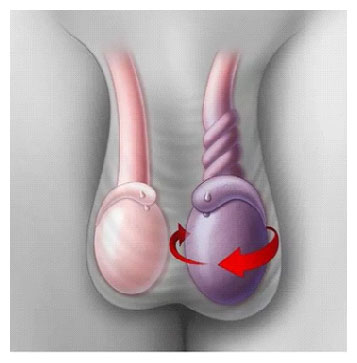
How Does Testicular Torsion Occur?
Testicular torsion can be caused by trauma or occur spontaneously. When torsion occurs, blood flow to the testicles is cut off. As a result, the tissue is deprived of nutrients.
If testicular torsion is diagnosed and corrected within the first 6 hours, the problem can be resolved without any complications. However, as time passes, the tissue’s functions deteriorate, and the body begins to break it down. In such a case, immediate surgical intervention is required.
What Are the Symptoms of Testicular Torsion?
Pain, hardness, and swelling in the testicle that begin suddenly are among the symptoms of testicular torsion. Although these symptoms can be confused with those of testicular infections—known as epididymitis—an accurate diagnosis will be made when a person with these symptoms sees a doctor. For this reason, anyone with these symptoms should be taken directly to a urologist.
Symptoms may also appear during sleep. You should not think, “Let’s wait until morning—maybe it will go away.” Because, as we mentioned at the beginning of this article, the 6-hour window is critical. Any delay beyond this timeframe reduces the viability of the testicular tissue. If we wait too long—even when the tissue could still be saved—we will be forced to remove the testicular tissue.
How Is Testicular Torsion Diagnosed?
The physical examination is of great importance in diagnosis. In the early stages, the cord reflex may be absent on the affected side. Mild redness of the skin, sudden fluid accumulation between the testicular membranes, and darkening of the skin color of the scrotum may be observed. In particular, an increase in pain intensity when the affected testis is manually lifted upward and brought closer to the body is a finding suggestive of testicular torsion.In patients who present late, pain may decrease because the testicular tissue has died.
In addition to a physical examination, color Doppler ultrasound or scintigraphy can be performed to assess blood flow in the testicle. A decrease or absence of blood flow in these tests suggests testicular torsion.
Testicular torsion can be mistaken for other conditions that cause pain in the scrotum (such as inflammation, fluid buildup, hernia, varicocele, cancer, or trauma).
Treatment for Testicular Torsion (Testicular Torsion Surgery)
In the treatment of testicular torsion, it is crucial not to delay in order to save the testicular tissue. The twisting of the testis cuts off the blood supply to it, causing the testicular tissue to die. If treatment is administered within the first 6 hours, it is possible to save the tissue.
A person with testicular torsion must be examined immediately, and once a diagnosis is made, they must undergo surgery as soon as possible. After the testicle is returned to its normal position, if the tissue is in a condition that allows for restoration, repair is performed. If the testicular tissue has lost its function, it is completely removed because it will no longer serve any purpose and could also affect the other testicle, potentially impairing sperm production there.
Send Your Message