
Overactive Bladder
What Is an Overactive Bladder?
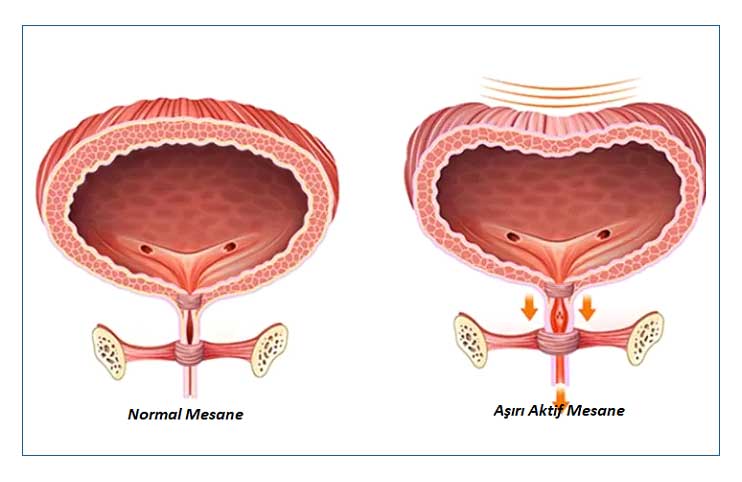
Overactive bladder (OAB) is a condition characterized by sudden and involuntary bladder contractions. It causes a sudden and persistent urge to urinate. Although patients experience a sudden, intense urge to urinate, they pass only a small amount of urine each time. This condition is the primary cause of urge incontinence.
How Is Overactive Bladder Diagnosed?
A person’s symptoms are very important for diagnosis. Typical symptoms include getting up to urinate at least 3 times a night, increased urinary frequency (needing to urinate at least 8 times during the day), a sudden urge to urinate, and urinary incontinence when unable to reach the restroom in time.
A urinalysis is performed, and an ultrasound is used to measure bladder capacity before urination and the amount of urine remaining in the bladder after urination. Uroflowmetry and urodynamic testing may also be performed if deemed necessary.
How Is an Overactive Bladder Treated?
Treatment methods can be divided into three groups: behavioral, medical, and surgical.
Behavioral Therapy
The most important component of behavioral therapy is a set of exercises known as Kegel exercises, which help relax the bladder. These exercises are demonstrated to the patient by a doctor, and the patient is expected to perform them approximately 30–80 times a day. The goal is to strengthen the pelvic floor muscles. Behavioral therapies can be varied to include strategies such as scheduled bathroom visits and correcting bathroom habits. In summary, the following steps can be taken:
What Are the Surgical Methods for Treating Overactive Bladder (OAB)?
Common treatment options:
⦁ Intravesical botulinum toxin injection,
⦁ Nerve stimulation, also known as neuromodulation,
⦁ Surgical methods to increase bladder capacity.
Botulinum toxin
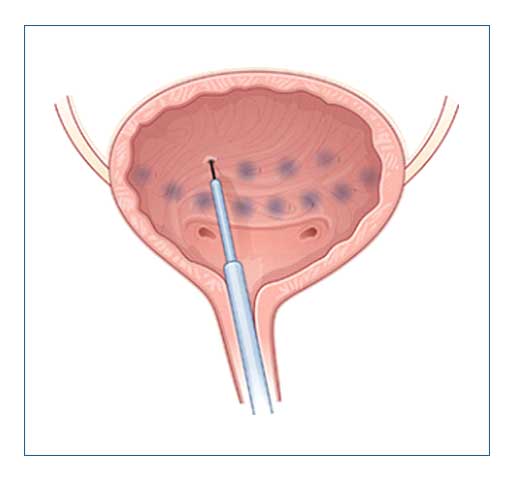
Botulinum toxin, one of whose brand names is Botox, is frequently used in cosmetic surgery. The toxin is injected into the bladder wall to reduce the nerve activity that causes OAB symptoms. This treatment can improve symptoms such as a sudden urge to urinate, frequent urination, and urinary incontinence associated with a sudden urge to urinate.
The effects of the procedure wear off over time, and a repeat treatment is needed after 4–9 months. Some patients (less than 10%) may experience difficulty urinating after a botulinum toxin injection and may require a catheter. Since catheters can increase the risk of urinary tract infections, your doctor may prescribe antibiotics.
Nerve stimulation
Nerve stimulation, also known as neuromodulation, is a treatment that uses electrical currents to stimulate the sacral nerves that control the bladder. There are two types of nerve stimulation:
1) Stimulation of the tibial nerve
To stimulate the tibial nerve, your doctor will insert a needle near your ankle to deliver an electrical current. The needle passes through your skin and stimulates the tibial nerve, which runs from the inner side of your ankle down your leg to the sacral nerves.
Treatment for tibial nerve stimulation typically consists of 12 sessions. Treatment sessions are administered once a week at the clinic and usually last 30 minutes. The effects will diminish over time, and additional treatment sessions may be needed.
2) Sacral nerve stimulation:
The sacral nerve stimulation procedure is performed in two stages. First, the doctor places an electrode on your skin and tests whether your AAM symptoms respond to nerve stimulation. If there is a response, you will undergo surgery to implant a programmable current generator in the upper part of your pelvic bone
After surgery, you will be able to control the generator using a device outside your body. This device will control the electrical current applied to the nerves leading to the bladder. Sacral nerve stimulation can significantly reduce your symptoms.
There is a risk of postoperative infection, and you may experience pain at the implantation site. Over time, the generator or electrodes may shift, causing discomfort. The generator’s battery may also run out; if it does, another surgical procedure may be required to replace it. Be sure to discuss any concerns you have about these risks with your doctor.
Bladder Surgery
If your symptoms do not improve with medication or other treatments, you may need bladder surgery. The purpose of the procedure is to increase bladder capacity. The doctor makes an incision in the lower abdomen and uses a section of your intestine to enlarge the bladder. This procedure is called bladder augmentation or oyster cystoplasty and is rarely performed today. If this surgery is recommended for you, you should discuss the details and potential side effects with your doctor, as they can be quite significant.
Send Your Message

