
Bedwetting (Nocturnal Enuresis)
When Do Children Learn to Use the Bathroom?
A child without any structural (anatomical) abnormalities typically learns to hold their urine and use the toilet, either with or without assistance, around the age of 2.5 (between 1.5 and 4 years old). The child is expected to have mastered this skill by age 5. If the child has not mastered it by this age, the cause should be investigated.
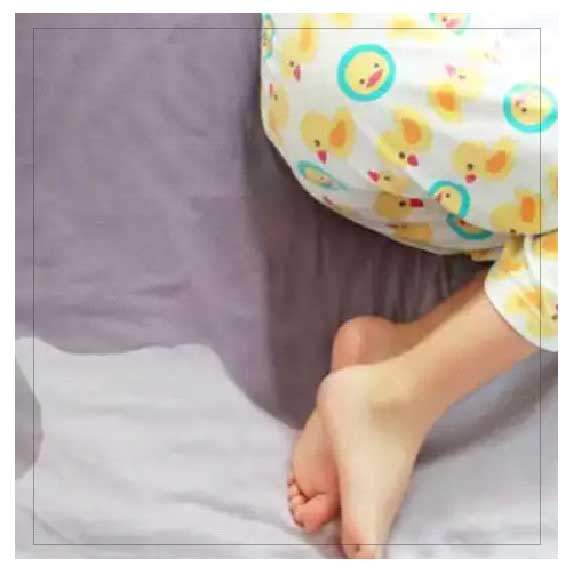
What Is Nocturnal Enuresis?
Bedwetting (nocturnal enuresis) is a very common condition in children. It occurs in roughly 15 out of every 100 children aged 5. It is estimated that approximately one million children in our country experience bedwetting. Although the prevalence decreases with age, bedwetting can still occur in older children. This condition may present as a single symptom or may be accompanied by daytime urinary symptoms. Distinguishing between these is important for ensuring proper treatment.
What Causes Nocturnal Enuresis?
There are essentially three factors that contribute to bedwetting. These include excessive urine production at night, excessive contraction of the bladder at night, and sleep disturbances. These factors often occur together and contribute to bedwetting. Bedwetting has also been linked to genetics. In other words, if this condition was present in the mother, father, or siblings during childhood, it increases the likelihood of the child experiencing it.
How Should You Treat Your Child?
Don’t scold your child when they have an accident, don’t embarrass them, don’t compare them to other children, and don’t punish them.
Explain to your child that this issue isn’t a big deal. However, tell them that you want to take them to a doctor because you think it’s affecting them, and that you’ll be there to support them throughout the testing and treatment process.
How Is Nocturnal Enuresis Treated?
If this condition persists after the age of 5, treatment is recommended, as it can lead to certain psychological and sociological problems in children. There are many different treatment methods, and the most appropriate approach is for the doctor to identify each child’s specific habits and provide treatment tailored to them. For the treatment to be successful, there must be good communication between the family, the child, and the doctor, and it is important for everyone to be committed to the process.
For a child scheduled for treatment, it is essential to ensure that the underlying cause of this problem is not a congenital structural abnormality. In the treatment of enuresis, it is recommended to use a combination of several techniques. These techniques include:
Motivation Techniques
Record-keeping and rewards: In the treatment of enuresis, keeping a calendar and using reward techniques are methods that both boost the child’s motivation and foster a sense of responsibility. The child marks wet or dry nights on a calendar. Children who cannot write yet can use pictures of the sun and rain, while those who can write may use words. These marks must be made by the child themselves. If there are many dry nights during follow-up visits, the child is rewarded (such as playing a game of their choice). Emotional rewards (such as praise, a hug, a pat on the head, or exaggerating their success) are more effective than tangible rewards (such as toys or food).
Fluid Restriction
Limiting fluid intake (tea, soda, watermelon, etc.) after dinner can reduce the amount of urine produced during sleep. The responsibility for fluid restriction should be given to the child, and care should be taken to prevent the issue from becoming a new source of conflict. The child must go to the bathroom before going to bed and should condition themselves to get up to use the bathroom once they are in bed.
⦁ Conditioning (Alarm Device);
This system, which features a moisture-sensitive component placed on the underwear or bedsheet, wakes the child with an audible alert the moment bedwetting begins. Although it may not seem very helpful in the first few days, results can be achieved with 6–8 weeks of treatment. Alarm systems are an effective method for treating both nighttime bedwetting (enuresis) during treatment and after treatment.
Medication Treatment
The medication should be taken at the dose recommended by the doctor and without missing any doses. It is important to remember that missing doses will set the treatment process back. Medication should be discontinued by gradually reducing the dose as directed by the doctor. To this end, medications that reduce the kidneys’ rate of urine production overnight are used. This medication, which contains desmopressin as its active ingredient and is taken orally, reduces urine production overnight, thereby prolonging the time it takes for the bladder to fill. After the medication is discontinued, nighttime urination may recur. If this happens, you should consult your doctor.
In children who are slow to respond to treatment, various methods can be used in combination. Sometimes, approaches such as switching methods—for example, using a different one at each stage—yield faster results.
Bedwetting may recur despite treatment. However, if the issue is patiently addressed and treated again, every child will eventually be free from the problem of waking up with wet sheets at 6 a.m. Very few adults continue to experience bedwetting.
In conclusion, bedwetting is a condition that negatively affects the quality of life for both children and their families, and it is recommended that families consult a specialist in pediatric urology.
Send Your Message