Doctor's Office

0322 503 80 70

WhatsApp & Mobile

0543 333 33 34

Comments & Opinions

Patient Testimonials

Benign Prostatic Hyperplasia

What Is the Prostate?

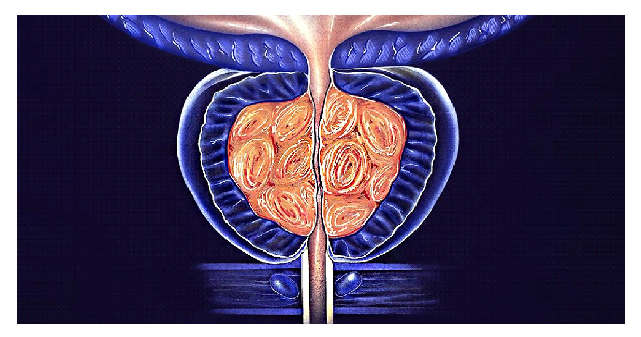
The prostate is a small gland that is part of the male reproductive system; it is located below the bladder and in front of the rectum. This organ, which is walnut-sized and shaped like a bulb, surrounds the urethra—the tube through which urine passes—and plays an important role in controlling urine flow. The prostate’s primary function is to combine with sperm to help produce semen.
The Prostate GFunctions What are they?

The prostate produces the fluid that nourishes and carries sperm. This fluid—known as prostatic fluid—consists of enzymes and nutrients found in semen that are essential for sperm motility. The prostate also helps ensure the proper functioning of the urinary tract. The fluids secreted by the prostate regulate the environment through which sperm and other fluids flow in the sperm-carrying ducts.
Prostate Diseases What are they?

  1. Benign Prostatic Hyperplasia (BPH)
  2. Prostate Cancer
  3. Prostatitis

What Is Benign Prostatic Hyperplasia?

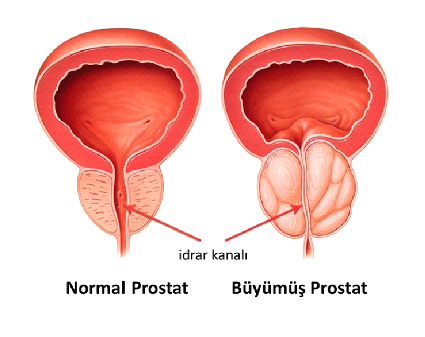
Benign prostatic hyperplasia (BPH) is one of the most common urological conditions in men over the age of 50, and its prevalence increases with age. As the prostate enlarges, it puts pressure on the bladder, leading to difficulty urinating, frequent urination, and other lower urinary tract symptoms.

Benign Prostatic Hyperplasia (BPH) Gappearance PPrevalence and RRisk FFactors What Are They?

1.1. Prevalence

  • 20–30% of men over the age of 40
  • 50% of men over the age of 50
  • 80% of men aged 70 and older
  • It occurs in 90 percent of people aged 80 and older.

BPH is not associated with prostate cancer, but both are conditions whose prevalence increases with age.

Benign Prostatic Hyperplasiain (BPH) What Are the Risk Factors?

1.2. Risk Factors

  • Advanced age → This is the most important risk factor.
  • Genetic predisposition → The risk is higher in people with a family history of BPH.
  • Hormonal changes → Tissue growth occurs with age due to the effects of testosterone on the prostate.
  • Obesity and metabolic syndrome → Are associated with insulin resistance and inflammation.
  • A sedentary lifestyle → Lack of exercise may play a role in the development of BPH.

Benign Prostatic Hyperplasia (BPH) BSymptoms What Are They?

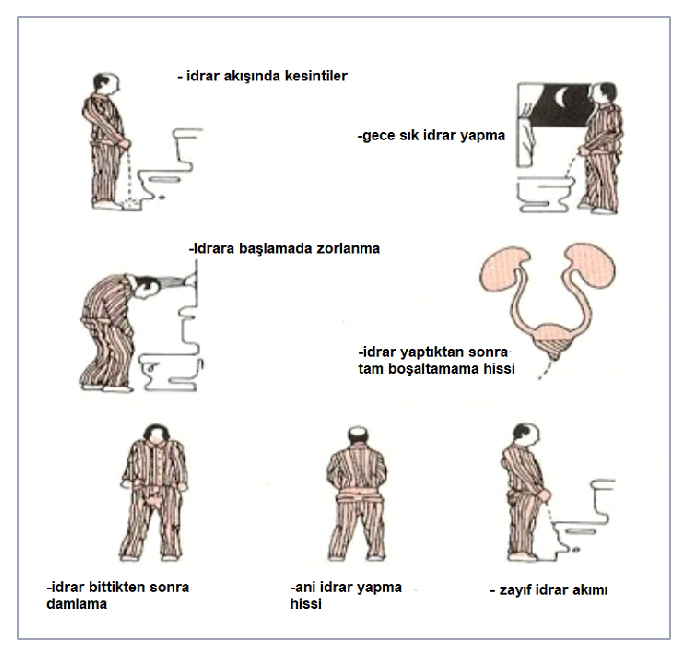
Symptoms of BPH arise due to pressure exerted by the prostate on the urinary tract (urethra) and are referred to as “Lower Urinary Tract Symptoms (LUTS).”

2.1. Obstructive Symptoms (Symptoms That Impede Urine Flow)

  • Weak urine stream
  • Intermittent urination
  • Difficulty urinating
  • The sensation that the bladder hasn't fully emptied
  • Advanced urinary retention (inability to urinate at all)

2.2. Irritative Symptoms (Symptoms Related to Bladder Discomfort)

  • Frequent urination (day and night)
  • Urge to urinate (urgency)
  • Frequent nighttime urination (nocturia)
  • Urinary incontinence

BPH can sometimes lead to urinary tract infections, bladder stones, and, in severe cases, kidney failure.

Benign Prostatic Hyperplasiane (BPH) How Is It Diagnosed?

To diagnose BPH, the patient’s symptoms are evaluated and various tests are performed:


3.1. Clinical Evaluation

✔International Prostate Symptom Score (IPSS) → Used to assess the patient’s symptoms.

✔Digital Rectal Exam (DRE) → The size and consistency of the prostate are assessed.

✔PSA Test (Prostate-Specific Antigen) → Used to distinguish prostate cancer from other conditions.


3.2. Imaging and Tests


✔ Uroflowmetry → Measures urine flow rate.

✔ Postvoid Residual (PVR) Measurement → Determines the amount of urine remaining in the bladder.

✔ Prostate Ultrasound (TRUS – Transrectal Ultrasound) → Used to measure prostate volume.

✔ Urodynamic Tests → Assess bladder function in suspected cases.


Elevated PSA levels may indicate not only cancer but also conditions such as BPH or prostatitis.

How Is Benign Prostatic Hyperplasia (BPH) Treated?

The choice of treatment depends on the severity of the patient's symptoms, the size of the prostate, and the impact on the patient's quality of life.


4.1. Medical (Drug) Treatment


1) Alpha Blockers (Tamsulosin, Alfuzosin, Silodosin)

  • It relaxes the smooth muscles of the bladder neck and prostate, facilitating urine flow.
  • It takes effect quickly (symptoms improve within 2–4 weeks).
  • Side effects: Dizziness, low blood pressure, retrograde ejaculation.

2) 5-Alpha Reductase Inhibitors (Finasteride, Dutasteride)

  • It causes the prostate to shrink by blocking the conversion of testosterone to DHT.
  • It is beneficial for long-term use in cases of enlarged prostate (over 40 ml).
  • Side effects: Decreased libido, erectile dysfunction, breast tenderness.

3) Phosphodiesterase-5 Inhibitors (Tadalafil – low dose)

  • It can improve both BPH symptoms and erectile dysfunction.
  • It is preferred especially in young patients.

4) Combination Therapies

  • Alpha-blocker + 5-alpha-reductase inhibitor
  • Alpha-blocker + PDE-5 inhibitor


If medical treatment is insufficient or if the patient develops severe urinary retention, surgery should be considered.
When Should Surgical Treatment Be Performed for Benign Prostatic Hyperplasia (BPH)?

Most patients with BPH can be managed with medication, but in some cases, surgery is necessary.


1.1. Absolute Surgical Indications (Conditions Requiring Surgery)


✅ Severe urinary retention (inability to urinate at all)

✅ Bladder stone formation (stone formation due to chronic urine retention)

✅ Recurrent urinary tract infections

✅ Kidney failure (development of hydronephrosis or elevated creatinine levels)

✅ Bladder diverticulum (the formation of pockets in the bladder wall where urine accumulates)

✅ Severe difficulty urinating that cannot be controlled with medication


1.2. Relative Surgical Indications (Conditions Where Surgery May Be Considered)


  • Symptoms do not improve despite medication
  • The patient's inability to tolerate treatment due to side effects of the medication
  • Frequent urination at night (nocturia) and urgency symptoms significantly impair quality of life
  • Frequent urinary incontinence symptoms


The decision to proceed with surgery should be made after considering the patient's overall health and the risks associated with the procedure.

What Surgical Procedures Are Used to Treat Benign Prostatic Hyperplasia (BPH)?

The goal of BPH surgery is to remove or reduce the portion of the prostate that is blocking the urinary tract.

Surgical methods can be classified into two main groups:

  • Traditional surgical methods (open and closed surgeries)
  • Minimally invasive and laser treatments

2.1. Traditional Surgical Methods

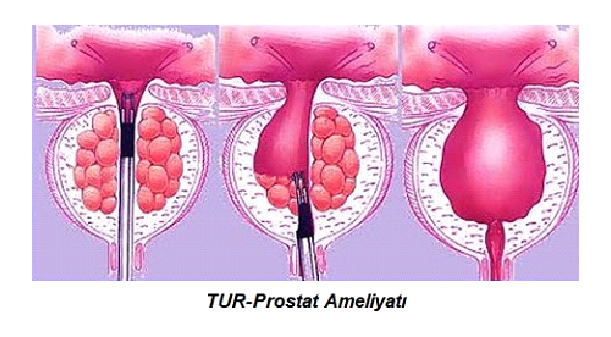
🔹 1) TUR-P (Transurethral Resection of the Prostate)

  • It is the most common BPH surgery.
  • Using a closed technique, the surgeon enters through the urinary tract and removes a section of prostate tissue.
  • It is particularly ideal for patients whose prostate volume is between 30 and 80 mL.

✅ Benefits:

  • It provides an effective and long-lasting solution.
  • It is less invasive than open surgery.

❌ Side Effects:

  • Retrograde ejaculation (60–80%)
  • Bleeding (especially in cases of enlarged prostates)
  • Rarely, urinary incontinence or urethral stricture

🔹 2) Open Prostatectomy (Adenomectomy)

  • This procedure is performed if the prostate volume is greater than 100 ml or if there are bladder stones.
  • The enlarged portion of the prostate is completely removed through an incision in the abdomen.

✅ Benefits:

  • It is the most effective treatment for enlarged prostates.

❌ Side Effects:

  • Long hospital stay
  • High risk of bleeding
  • The recovery period is longer.

2.2. Minimally Invasive and Laser Methods

🔹 1) HOLEP (Holmium Laser Enucleation)

  • It is a procedure in which prostate tissue is removed using laser energy.
  • It can be used even in cases of enlarged prostates.

✅ Benefits:

  • The risk of bleeding is low.
  • It reduces the need for open surgery.

❌ Side Effects:

  • Retrograde ejaculation (70–80%)
  • It may be temporary urinary incontinence.

🔹 2) Steam Therapy

  • The prostate tissue is shrunk by applying steam to it.

✅ Benefits:

  • It helps maintain sexual function.
  • It can be administered under local anesthesia.

❌ Side Effects:

  • Its effectiveness is not as strong as TUR-P in the long term.
  • It takes time for the prostate to shrink.

🔹 3) UROLIFT (Prostate Suspension Procedure)

  • Small implants are used to prevent the prostate from pressing on the urinary tract.

✅ Benefits:

  • Erectile function is preserved.
  • It offers a quick recovery time.

❌ Side Effects:

  • It is not effective for medium-sized prostates.

📌 Laser and minimally invasive procedures may be beneficial for older patients or those at high risk for surgery.

What Are the Possible Side Effects of BPH Surgery?

Just as every surgical procedure has its advantages, it also carries certain risks and side effects.

3.1. Early-Stage Side Effects

🔸 Bleeding → The risk increases with enlarged prostates.

🔸 Temporary urinary incontinence → This may occur especially during the first few weeks after TUR-P.

🔸 Urinary tract infection → The risk may increase due to catheter use.

🔸 Bladder spasms → These are primarily caused by bladder irritation, especially following surgery.

3.2. Late-Onset Side Effects

🔹 Retrograde Ejaculation (60–90%) → Semen flows into the bladder instead of being expelled during sexual intercourse

🔹 Urethral stricture (5–10%) → Postoperative narrowing of the urinary tract

🔹 Erectile dysfunction (rare) → It is usually temporary, and the rate of permanent dysfunction is low.

📌 Minimally invasive methods such as steam therapy and Urolift offer advantages in terms of preserving sexual function.

Conclusion and Summary

✔ BPH is a common condition in men as they age, and some patients require surgery.

✔ Surgery is necessary if there is urinary retention, kidney failure, or recurrent infections.

✔ TUR-P is the gold standard for small and medium-sized prostates; for large prostates, HOLEP or open prostatectomy is preferred.

✔ Minimally invasive procedures may be beneficial, especially for patients who wish to preserve their sexual function.

✔ The most common side effect after surgery is retrograde ejaculation.

In the treatment of BPH, determining the most appropriate method based on patient characteristics is of critical importance.

Send Your Message

    Ali Şahin Design