
Doctor's Office

0322 503 80 70

WhatsApp & Mobile

0543 333 33 34

Comments & Opinions

Patient Testimonials

Cystocele

What Is a Cystocele?

A cystocele is a herniation of the bladder into the vagina. It is caused by the weakening of the tissues surrounding the vagina and the cervix. It is frequently seen in women who have had multiple or difficult childbirths. The natural folds in the area where the bladder prolapses are smoothed out, giving it a smooth, flat appearance.
Patients typically complain of a feeling of fullness and a mass in the vagina. If there is also prolapse of the urinary tract, urinary incontinence may also be observed in patients. In advanced cases, cystoceles can progress to the point where they protrude from the vagina, especially during straining.
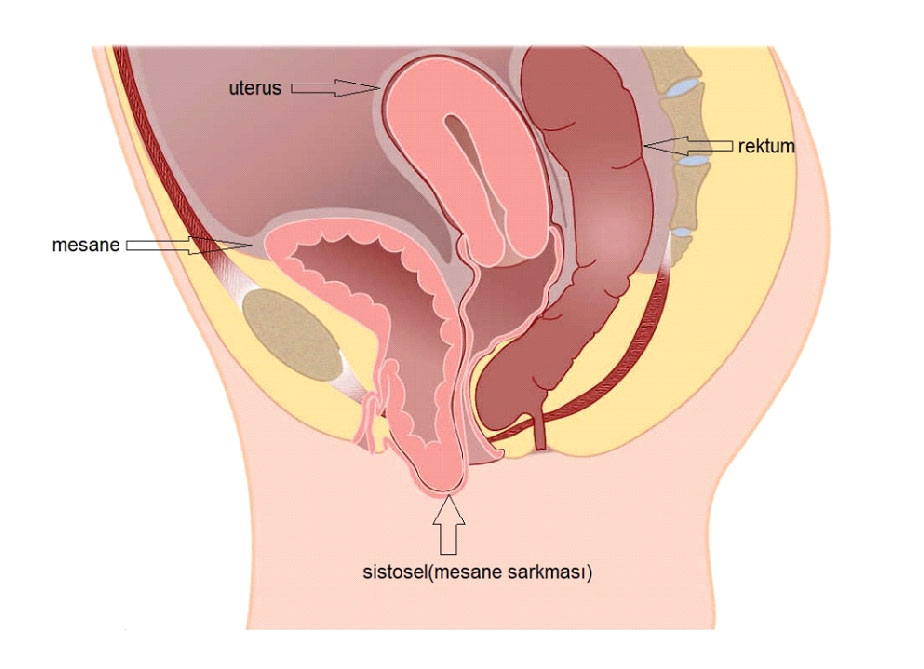
What Are the Risk Factors for a Cystocele?

Cystocele is caused by the weakening of the supporting tissues and pelvic muscle structures between the bladder and the vagina. Risk factors that may contribute to this condition include:
· Difficult vaginal (normal) delivery,
· Having had multiple births,
· Giving birth to a large baby,
· Obesity,
· Menopause,
· Advanced age,
· Having undergone a hysterectomy (removal of the uterus),
· Constipation,
· Lifting heavy loads

What Are the Symptoms of Cystoselin?

A protrusion, lump, sagging, or swelling at the front or top of the vaginal opening is the most significant symptom. Some patients report only a sensation of pressure or heaviness. Frequent urination and dysuria (a burning sensation during urination) may occur. A sensation of incomplete bladder emptying may be present, and in some patients, urination may become easier after pushing the protrusion back inside. Additionally, if a urethrocele—that is, a prolapse of the urethra—is present, urinary incontinence may occur.

How Is a Cystocele Treated?

The treatment for cystocele is surgical. However, not every cystocele requires treatment. The patient must have significant symptoms and request treatment.
Surgical treatment involves an anterior colporrhaphy (anterior repair). This surgery can be performed by reattaching separated or torn supportive tissues, or by reinforcing weakened supportive tissues using synthetic materials called mesh.

What Are the Possible Complications (Certain Adverse Effects) Associated with the Surgical Treatment of Cystocele?

  • Risk of bleeding during surgery
  • Other organ injuries (bladder injury, rectal injury)
  • Retention (Inability of the bladder to fully empty)
  • Dyspareunia (Pain during sexual intercourse)
  • Fistula (the formation of an unwanted new connection between the vagina and the urinary tract, and
    the passage of urine through the vagina)
  • Erosion (the synthetic material used in the procedure protruding from the vagina)
  • Persistent or new-onset urinary incontinence after surgery (whether urinary incontinence
    was present before surgery or not)
  • Shrinkage of the implanted synthetic material
    Recurrence (recurrence of the disease)

How Is Follow-Up Conducted After Cystocele Surgery?

The hospital stay is 1–2 days. Outpatient follow-up visits are scheduled for the first week, first month, third month, sixth month, and first year after surgery. If the disease recurs, it is treated with a second procedure—either through the same surgical site (
) or via an abdominal approach.

Send Your Message

    Ali Şahin Design