
What Is a Bladder Stone and What Causes It?
Normally, bladder stones do not form. There are certain substances, such as citrate, that prevent stone formation in the urine. However, bladder stones can form due to changes in the composition of these balanced substances. Bladder stones can also form as a result of small stones from the kidneys and ureters forming a core and growing.
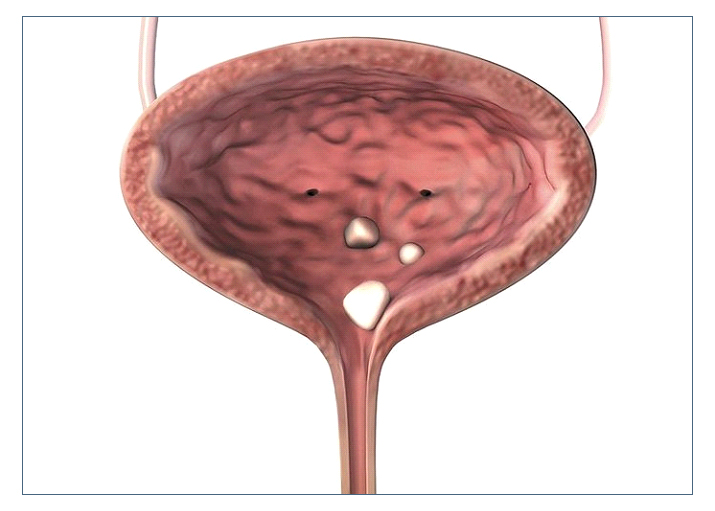
Image: Bladder Stone
If bladder emptying is inadequate due to conditions such as benign prostatic hyperplasia, prostate cancer, or a neurogenic bladder, and residual urine remains after urination, bladder stones may form. They can also develop as a result of bladder infections.
What Is a Bladder Stone and What Causes It?
Normally, bladder stones do not form. There are certain substances, such as citrate, that prevent stone formation in the urine. However, bladder stones can form due to changes in the composition of these balanced substances. Bladder stones can also form as a result of small stones from the kidneys and ureters forming a core and growing.
Image: Bladder Stone
If bladder emptying is inadequate due to conditions such as benign prostatic hyperplasia, prostate cancer, or a neurogenic bladder, and residual urine remains after urination, bladder stones may form. They can also develop as a result of bladder infections.
What Are the Symptoms?
Symptoms of bladder stones may include difficulty urinating due to the stones blocking the flow of urine, a decrease in urine stream pressure, blood in the urine, and frequent urination.
How Is It Diagnosed?
To diagnose a bladder stone, a medical history—including past illnesses, surgeries, and current comorbidities—is first obtained, followed by a detailed physical examination. During the physical examination, tenderness is felt when pressure is applied to the lower abdomen. X-rays and ultrasound may be performed to visualize the stone. If necessary, a CT scan should be performed. If the patient is male, the presence of benign prostatic hyperplasia should be investigated. Additionally, the presence of any accompanying neurogenic bladder or metabolic disorders should be evaluated.
How Is It Treated?
Once a bladder stone has been detected, the stone’s size, number, and any underlying conditions should be determined, and treatment options should be discussed. When treating bladder stones, if the stone originated in the kidneys or ureters, the patient may be able to pass it on their own, and stones of this nature are expected to pass naturally. However, larger stones must be removed from the bladder.
If there are factors causing the stones, they must be eliminated. If the bladder stone is small, it can be碎ed and removed using a minimally invasive technique—such as a laser or other instruments—by inserting a camera-equipped cystoscope through the urethra. For multiple stones larger than 3 cm, percutaneous cystolithotomy (PSL) can be performed, and the success rate is close to 100%. If necessary, open surgery may also be performed for very large stones.