Bladder Cancer
- What Is the Bladder and What Does It Do?
- What Is Bladder Cancer?
- How Is Bladder Cancer Classified?
- What Are the Risk Factors for Bladder Cancer?
- What Are the Symptoms of Bladder Cancer?
- How Do We Diagnose Bladder Cancer?
- How Do We Treat Superficial Bladder Cancer?
- How Do We Treat Invasive (T2 and Higher) Bladder Cancer?
- Who Should Undergo Radical Cystectomy (Bladder Removal) for Invasive Bladder Cancer?
- Is There an Alternative to Bladder Removal? (For Patients Who Cannot Undergo Radical Cystectomy)
- Is Radical Cystectomy Suitable for Everyone?
- How Should Postoperative Follow-Up Be Conducted for Bladder Cancer?
- Conclusion and Summary
What Is the Bladder and What Does It Do?
The bladder—the medical term for the urinary bladder—is an important organ located in the urinary tract of our body. The primary and basic function of the bladder is to store urine from the kidneys and to ensure that this urine is voluntarily emptied at appropriate intervals—that is, to urinate.
What Is Bladder Cancer?
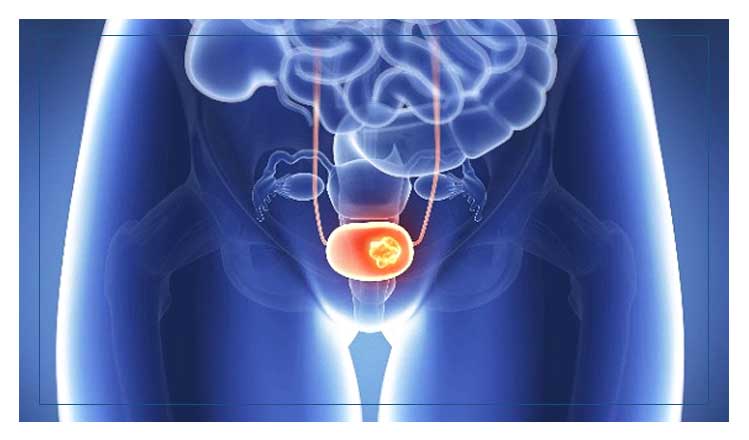
Bladder cancer is a type of cancer that results from the abnormal growth of cells in the bladder wall. The most common type is urothelial (transitional cell) carcinoma. Less common types include squamous cell carcinoma and adenocarcinoma. Bladder cancer is generally more common in men, and one of the most significant risk factors is smoking.
How Is Bladder Cancer Classified?
Bladder cancer is classified histologically and clinically:
A) Histological Classification (Type of Cancer)
1. Urothelial Carcinoma (Transitional Cell Carcinoma) → This is the most common type (90%).
2. Squamous Cell Carcinoma → Develops as a result of chronic infection or prolonged irritation.
3. Adenocarcinoma → Originates in the glandular structures of the bladder; it is rare.
4. Small Cell Carcinoma → It is quite aggressive and rare.
5. Sarcomatoid Cancer → It originates in connective tissue; it is rare but aggressive.
6. Variant Types
B) Clinical Classification (Depth and Spread of Cancer)
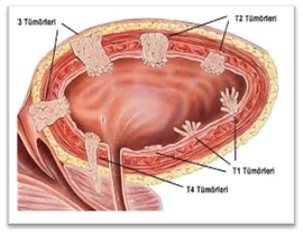
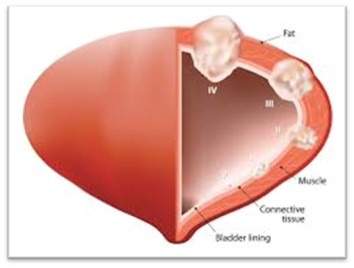
1. Superficial Bladder Cancer (Non-invasive, Ta–T1 stages) → Remains confined to the inner surface of the bladder (urothelium).
2. Invasive Bladder Cancer (Stage T2 and higher) → Has spread to the muscle layer of the bladder or beyond.
3. Metastatic Bladder Cancer → The cancer has spread to the lymph nodes or to distant organs.


What Are the Risk Factors for Bladder Cancer?
- Smoking → It is the biggest risk factor, accounting for 50% of cases.
- Chemical Substances (Amines, Dyes, Rubber, Leather Industry Exposures)
- Chronic Infections and Irritations (Long-term catheter use, schistosomiasis infection)
- History of Radiation Therapy (Patients who have received radiation therapy to the pelvic region)
- Family History and Genetic Predisposition
- Use of Estrogen Hormones (Has been linked to certain studies)
What Are the Symptoms of Bladder Cancer?
- Painless Hematuria (Blood in the Urine) → This is the most common symptom.
- Burning and Pain When Urinating
- Frequent Urination
- Difficulty Urinating, Intermittent Urination
- Pelvic and Back Pain (In Advanced Stages)
- Weight Loss, Fatigue, Persistent Infections
How Do We Diagnose Bladder Cancer?
A) Laboratory Tests
Urinalysis → Tests for hematuria (presence of blood) and infection.
Urine Cytology → The presence of cancer cells is assessed.
Tumor Markers → Tests such as NMP22 and BTA may be helpful.
B) Imaging Methods
Ultrasonography (USG) → Useful for large tumors, but cannot detect small lesions.
Magnetic Resonance Imaging (MRI) or Computed Tomography (CT) Urography → Shows tumor spread.
Positron Emission Tomography (PET-CT) → Used to assess distant metastases.
C) Endoscopic Diagnosis: Cystoscopy
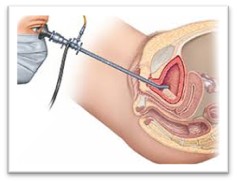
Cystoscopy → The inside of the bladder is examined directly, and biopsies are taken from suspicious lesions. It is the gold standard for diagnosis.

How Do We Treat Superficial Bladder Cancer?
- A) Treatment of Superficial Bladder Cancer (Stages Ta and T1)
- Transurethral Bladder Tumor Resection (TUR-MT) → The tumor is removed by scraping it away using a resectoscope inserted through the urethra.
- Intravesical BCG or Chemotherapy → After TUR-MT, BCG (an immune system booster) or chemotherapy drugs (mitomycin C, epirubicin) are administered into the bladder to prevent tumor recurrence.
Follow-up: Follow-up with a cystoscopy every 3 months.
Muscle Invasive (T2 and Higher) Bladder How Do We Treat Bladder Cancer?
1) Radical Cystectomy (Complete Removal of the Bladder)
It is the standard treatment method.
The bladder, the surrounding lymph nodes, and, if necessary, adjacent organs are removed.
- In men: The prostate and seminal vesicles may also be removed.
- In women: The uterus and ovaries may also be removed.
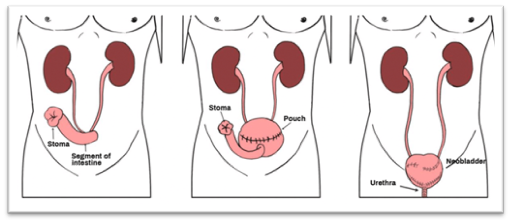
New pathways are formed to direct the flow of urine:
- Ileal Conduit: Urine is diverted to the skin using a section of the intestine.
- Orthotopic Neobladder: A new bladder is created from a section of the intestine, allowing the patient to urinate normally.
- Cutaneous Ureterostomy: The ureters are brought out directly through the skin.

2) Chemotherapy and Radiation Therapy
- Neoadjuvant Chemotherapy (Preoperative) → Administered to shrink the tumor.
- Adjuvant Chemotherapy (Postoperative) → Administered to patients with lymph node metastases.
- Radiation Therapy → It can be used for patients who are not candidates for surgery or as an organ-preserving treatment.
3) Immunotherapy and Targeted Therapies
- Checkpoint Inhibitors (Atezolizumab, Pembrolizumab) → These are new-generation treatments that activate the immune system.
- FGFR Inhibitors → Used in patients with FGFR3 mutations.
Invasive Radical Cystectomy(Bladder Removal) Who Should Undergo This Procedure?
Radical cystectomy is the most appropriate option for the following patients:
- Muscle-Invasive Bladder Cancer (T2-T3):
- If the tumor has spread to the muscular layer of the bladder but has not metastasized,
- Patients with Stage T4a:
- If the tumor has spread only to neighboring organs, such as the prostate or uterus,
- Single-focus, completely resectable tumors
- Patients in good general condition (those with a high performance score and good organ function)
- Those with minimal or no lymph node involvement
- High-risk superficial tumors
- In advanced-stage disease, for palliative purposes, such as to control bleeding
Is there an alternative to a cystectomy? (Radical Cystectomy For Patients Who Cannot Undergo It)
1️ Bladder-Sparing Therapy (TUR-MT + Chemoradiotherapy)
Who is it suitable for?
- Patients with T2 tumors that are single-focus and can be completely resected using TUR-MT
- Patients who do not want surgery or are unable to undergo it
How is it applied?
- TUR-MT: The bladder tumor is completely excised.
- Concurrent Chemoradiotherapy:
- Radiation Therapy (RT) + Chemotherapy (Cisplatin or 5-FU)
- Follow-up: Close monitoring with a cystoscopy every 3 months is required.
Disadvantages:
High recurrence rate (greater risk of recurrence compared to radical cystectomy)
Loss of bladder function may develop (due to fibrosis and shrinkage)
2️ Palliative Chemotherapy and Immunotherapy (Stage 4 or Severe Comorbidities)
- Who is it suitable for?
Patients with metastatic (Stage 4) disease
Patients who cannot undergo radical cystectomy
If the tumor has spread to the point where it cannot be completely removed
- Treatment options:
Cisplatin-based chemotherapy (Gemcitabine + Cisplatin)
Immunotherapy (Atezolizumab, Pembrolizumab) in patients who cannot receive cisplatin
Targeted therapy (Erdafitinib) in patients with FGFR mutations
Objective: To slow the progression of the disease and extend life expectancy.
Radical Cystectomy Is It Suitable for Everyone?
- No!
- Although radical cystectomy is the most effective treatment for muscle-invasive bladder cancer, it is not suitable for every patient.
- For patients who are not candidates for surgery, bladder-preserving treatment or systemic chemotherapy and immunotherapy options may be considered.
- Decisions should be made on a case-by-case basis. In particular, for elderly patients and those with comorbidities, a combination of radiation therapy and chemotherapy may be a better option.
How Should Postoperative Follow-Up Be Conducted for Bladder Cancer?
- First 2 years: Cystoscopy and imaging tests are performed every 3 months.
- 2–5 years: Checkups are performed every 6 months.
- After 5 years: A checkup is performed once a year.
Recurrence can occur in 50–70% of cases of superficial cancer, so frequent follow-up is necessary.
Conclusion and Summary
- Bladder cancer detected at an early stage can be successfully managed with TUR-MT and intravesical therapies.
- In cases of invasive bladder cancer, patients’ life expectancy can be extended through radical cystectomy and appropriate urinary diversion.
- For patients with advanced-stage disease, immunotherapy and chemotherapy offer promising treatment options.
- Early diagnosis is crucial in the treatment of bladder cancer. Especially for smokers, a cystoscopy should be performed without delay if hematuria (blood in the urine) is detected.
- Although radical cystectomy is considered the gold standard of treatment for muscle-invasive bladder cancer (T2 and above), it may not be appropriate for every patient. The necessity and appropriateness of the surgery depend on many factors, such as the patient’s overall health, the extent of the tumor, and the patient’s preferences.
Send Your Message