
Urethral Stricture
- What Is Urethral Stricture?
- What Should the Normal Anatomy of the Urethra Look Like?
- What Are the Causes of Urethral Stricture?
- What Are the Symptoms of Urethral Stricture?
- How Is Urethral Stricture Diagnosed?
- How Do We Treat Urethral Stricture?
- When Should Open Surgery (Urethroplasty) Be Performed for Urethral Stricture?
- When Is an Oral Stent Used in Cases of Urethral Stricture?
- What Should We Keep in Mind After Urethral Stricture Surgery?
- Conclusion
What Is Urethral Stricture?
Urethral stricture is a condition caused by an abnormal narrowing of the urethra that obstructs the flow of urine. It is more common in men and can develop for various reasons. If left untreated, it can lead to serious kidney and bladder problems.
What Should the Normal Anatomy of the Urethra Look Like?
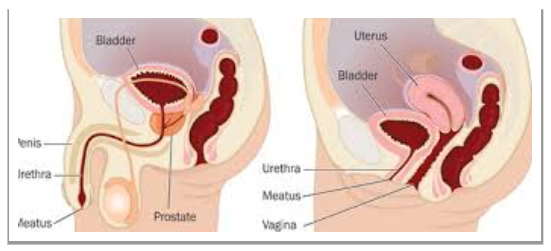
The urethra is a tube-shaped canal that allows urine to be expelled from the bladder. It is approximately 20 cm long in men and 4 cm long in women.
✔ The male urethra is divided into 3 main sections:
- Anterior urethra (penile urethra): It has a more flexible structure.
- Posterior urethra (membranous and prostatic urethra): It has a firmer and more rigid structure.
- Bulbar urethra: This is the area where strictures most commonly develop.
✔ Because the female urethra is short, strictures are rare.
Urethral stricture can develop in any part of the urethra and can seriously affect a patient’s quality of life by making it difficult to pass urine.
What Are the Causes of Urethral Stricture?
Urethral stricture can develop for many different reasons. The most common causes are as follows:
A) Traumatic Causes
✔ Pelvic Injuries: Traffic accidents, falls, and direct blows to the perineal region.
✔ After a Urethral Catheter or Endoscopy: Prolonged catheter use, repeated cystoscopies.
✔ Trauma During Sexual Intercourse: Penile fracture or injuries caused by force.
B) Infections
✔ Sexually Transmitted Diseases (STDs): Specifically, infections such as gonorrhea and chlamydia.
✔ Urethritis (Inflammation of the Urethra): Chronic infections can lead to stricture.
C) After Surgical Procedures
✔ Prostate Surgery: Urethral stricture may develop following TUR-P or radical prostatectomy.
✔ Hypospadias Surgery: Strictures may develop following the correction of congenital urethral anomalies.
D) Congenital Causes
✔ Urethral Valves: Male infants may be born with a blockage in the urethra.
E) Inflammatory and Autoimmune Diseases
✔ Lichen sclerosus (Balanitis xerotica obliterans – BXO): A skin condition that causes scar tissue to form on the urethral mucosa.
What Are the Symptoms of Urethral Stricture?
The symptoms of urethral stricture may vary depending on the severity of the condition and the length of the stricture:
✔ Difficulty urinating (the most common symptom)
✔ Decreased urine flow rate
✔ Intermittent or sputtering urination
✔ Dribbling after urination and a feeling of not being able to fully empty the bladder
✔ Susceptibility to urinary tract infections
✔ Development of bladder stones
✔ Complete obstruction (Emergency, inability to urinate, and bladder distension – acute retention)
If left untreated for a long time:
- Kidney failure may develop.
- The bladder may expand, and its function may be impaired.
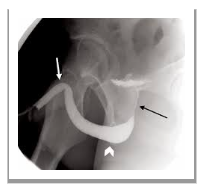
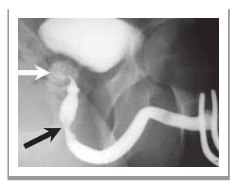
How Is Urethral Stricture Diagnosed?
✔ Infection:
- It is one of the most serious complications. Antibiotic-coated prostheses reduce the risk of infection.
- If an infection develops, the prosthesis may need to be removed.
✔ Mechanical Failure of the Prosthesis:
- Mechanical failures can occur, though rarely, particularly with inflatable prostheses.
- The lifespan of new-generation prosthetics ranges from 10 to 15 years.
✔ Pain and Swelling:
- You may experience mild pain during the first 1–2 weeks after surgery.
- Pain relievers and cold compresses can be used.
How Do We Treat Urethral Stricture?
Treatment for urethral stricture is determined based on the length and location of the stricture and the patient’s overall health.
A) Temporary Solutions
✔ Urethral Dilation (Widening)
- The urethra is dilated using a balloon or a catheter.
- It is a temporary solution; the narrowing usually recurs.
✔ Internal Urethrotomy (Stenosis Resection – DVIU)
- The narrowed area is cut open endoscopically.
- Kısa (<1 cm) darlıklarda etkili olabilir, ancak tekrarlama riski yüksektir.
B) Permanent Solutions – Surgical Methods
✔ Urethral Reconstruction (Urethroplasty)
- It is the gold standard of treatment.
- The urethra is repaired after the narrowed section is completely removed.
Types of Urethroplasty:
- Primary Anastomosis Urethroplasty
- In cases of short strictures (1–2 cm), the narrowed section of the urethra is excised and the ends are sutured end-to-end.
- Urethroplasty Using a Graft
- In cases of long strictures, the urethra is repaired using a buccal mucosa graft.
- Pedicle Flap Urethroplasty
- It is an alternative surgical technique that can be used in severe cases.
✔ Urethral Stent Placement
- It provides temporary relief for patients who are very elderly or not suitable for surgery.
When Should Open Surgery (Urethroplasty) Be Performed for Urethral Stricture?
The treatment method for urethral stricture is determined by considering the length and location of the stricture, the risk of recurrence, and the patient’s overall health. Open surgery (urethroplasty) is the most permanent treatment for urethral stricture and is preferred in the following cases:
✔ Narrowings longer than 2 cm
✔ Recurrent strictures following endoscopic treatment
✔ Patients with severe scarring and fibrosis
✔ Patients with complete blockages
✔ Penile urethral strictures
✔ Severe stenoses developing after trauma
In these cases, open surgery (urethroplasty) is the best option and provides a permanent solution.
If you provide detailed information about the patient's condition, we can discuss the most appropriate treatment method for this specific case.
When Is an Oral Stent Used in Cases of Urethral Stricture?
In open urethroplasty procedures, the use of tissue harvested from the mouth (typically the buccal mucosa, or oral mucosa) is preferred as an option that provides suitable tissue for urethral repair. Harvesting tissue from the oral cavity is used particularly when the urethra is affected by conditions such as narrowing, stricture, or obstruction. The use of oral mucosa is common in the following situations:
- Urethral Strictures
- If there is insufficient tissue,
- If Other Tissue Sources Are Insufficient: When tissue harvested from the groin or other parts of the body is insufficient, oral tissue may be a good alternative.
- Particularly in cases of long-standing and extensive strictures, the use of buccal mucosa may lead to better healing and function.
The use of buccal mucosa results in less pain and a lower risk of complications for the patient, while supporting the functional and aesthetic recovery of the urethra in the long term.
What Should We Keep in Mind After Urethral Stricture Surgery?
✔ Regular follow-up visits are required during the first 3–6 months after treatment.
✔ You should drink plenty of water to prevent urinary tract infections.
✔ Early intervention is important in cases of recurrent narrowing.
Conclusion
✔ If urethral stricture is not treated promptly and appropriately, it can lead to serious health problems.
✔ Endoscopic procedures are the most effective treatment option for short strictures, while urethroplasty is the most effective treatment option for long and recurrent strictures.
✔ Early diagnosis and regular follow-up improve patients’ quality of life and prevent serious complications such as kidney failure.
If you or a loved one has a specific condition related to urethral stricture, please contact us for more detailed information.
Send Your Message