
Kidney Cysts
What Is a Kidney Cyst?
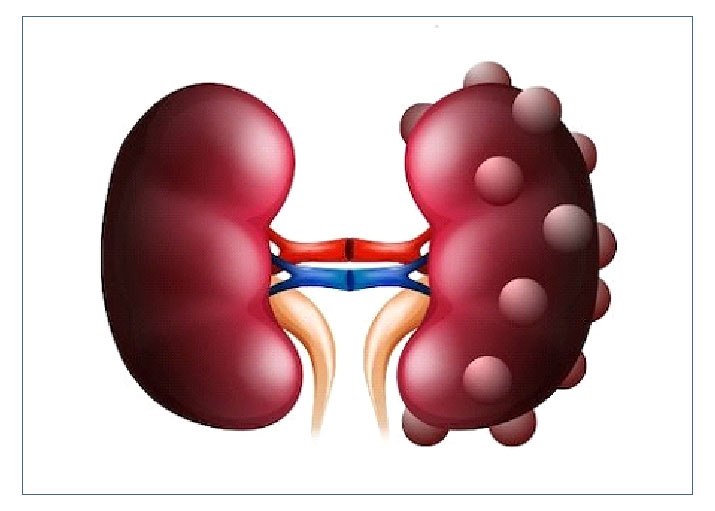
Kidney cysts are round, fluid-filled sacs that form on or inside the kidneys. Simple kidney cysts are the most common lesions found in the human kidney and are an acquired condition of the kidneys. Their prevalence increases with age and is observed in 50% of men and women over the age of 50. They generally do not cause any symptoms, and the diagnosis is usually made incidentally during radiological or X-ray examinations.
Although the vast majority of kidney cysts—which we refer to as “simple cysts”—are not a cause for concern regarding cancer, findings suggestive of a possible cancer may be detected on imaging studies. With the help of imaging techniques, a differential diagnosis of the cysts is made, they are evaluated for the possibility of cancer, and cyst monitoring and treatment are planned accordingly.
If bladder emptying is inadequate due to conditions such as benign prostatic hyperplasia, prostate cancer, or a neurogenic bladder, and residual urine remains after urination, bladder stones may form. They can also develop as a result of bladder infections.
Who Is at Risk?
⦁ Age: The prevalence of kidney cysts increases with age
⦁ Gender: They are more common in men (2–3 times more frequent).
⦁ Kidney stones: A risk factor for kidney cysts
⦁ Impaired kidney function or kidney failure
⦁ High blood pressure
⦁ Smoking is cited as a risk factor for the development of simple kidney cysts
Symptoms
⦁ Kidney cysts usually do not cause many symptoms
⦁ A mass felt in the abdomen,
⦁ Flank pain,
⦁ High blood pressure
⦁ Blood in the urine (hematuria),
⦁ Enlargement and obstruction of the kidney due to pressure from the cyst
⦁ A new cyst may form due to the formation of a pouch (diverticulum) opening into the renal pelvis or the closure of the connection between the diverticulum and the kidney
Diagnosis
Ultrasonography (USG):It is the imaging method of first choice for diagnosing simple kidney cysts.
Computed Tomography (CT):The diagnostic features of simplekidney cysts on CT are similar to those on ultrasound; however, CT is a commonly used imaging method for evaluating anatomical and vascular structures in cases where a definitive diagnosis of the cyst cannot be made with ultrasound, or in patients scheduled for surgery for a cyst.
Since cysts do not have blood vessels and are not directly connected to the urine-filtering units (nephrons), they do not show up on imaging (do not take up contrast). If there is contrast uptake in the cyst, its wall, or its septa, this is evidence of vascularization within the cyst and should therefore raise a high suspicion of cancer.
Magnetic Resonance Imaging (MRI): Although MRI provides more specific information about cystic fluid, it does not provide significantly more or more valuable information than ultrasound or CT. It is an imaging method used for differential diagnosis in cases where ultrasound and CT results are inconclusive.
Treatment
Many simple kidney cysts are diagnosed incidentally; they are usually located at the edge of the kidney—appearing as a bulge extending beyond the kidney’s contour—and do not cause any symptoms or complaints. If a simple kidney cyst does not cause any symptoms or complaints and does not affect kidney function, treatment may not be necessary.
It can be monitored at regular intervals. If the cyst’s structure or size changes during these follow-ups and causes symptoms or complaints, treatment may be recommended. You can choose your treatment option. In rare cases, a simple kidney cyst may disappear over time.
Open Surgery
Although open surgery has high success rates, it is not often preferred today because it requires a large incision to access the cyst, and due to the potential for postoperative pain, complications, and scarring.
Closed Laparoscopic Surgery
It has high success rates and has been reported to be less invasive than open surgery.
Simple kidney cysts that meet the treatment criteria can be safely and effectively treated with minimally invasive laparoscopic cyst surgery.
It can be monitored at regular intervals. If the cyst’s structure or size changes during these follow-ups and causes symptoms or complaints, treatment may be recommended. You can choose your treatment option. In rare cases, a simple kidney cyst may disappear over time.
Send Your Message
