
Doctor's Office

0322 503 80 70

WhatsApp & Mobile

0543 333 33 34

Comments & Opinions

Patient Testimonials

Non-Surgical Treatment for Peyronie's Disease

NON-SURGICAL TREATMENT FOR PENILE CURVATURE (NON-SURGICAL PEYRONIE'S DISEASE TREATMENTS)
 

Current Approaches in Modern Urology

Penile curvature (Peyronie’s disease) is a condition characterized by the bending of the penis to one side during an erection due to fibrotic plaques forming inside the penis. This curvature can lead to pain, difficulty during sexual intercourse, erectile dysfunction, and psychological stress. Peyronie’s disease is much more common than is generally believed and affects 10% of men.
In this comprehensive article, you will find detailed information on non-surgical treatments for penile curvature, including scientific evidence, mechanisms, treatment planning, and the methods used in modern urology.


1. What Is Penile Curvature (Peyronie's Disease)?

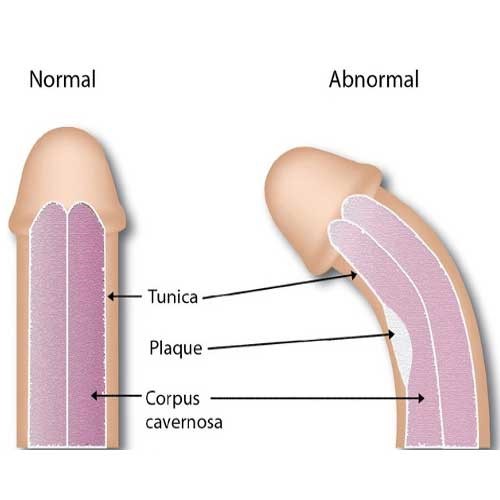
Peyronie’s disease is characterized by fibrosis and plaque formation in the tunica albuginea, the tough layer of connective tissue that surrounds the cavernous tissue. This plaque is inflexible and prevents one side of the penile tissue from expanding normally during an erection. This causes the penis to:
• Bend upward,
• Bend downward,
• Bend to the right,
• Bend to the left,
• Bend in a loop (circular curvature),

causes it to curl.


2. How Does Peyronie's Disease Develop?

Although the exact cause of penile curvature is unknown, the most widely accepted mechanism is as follows:
✔ Microtraumas (tissue damage during sexual intercourse),
✔ Inadequate healing response,
✔ Development of fibrosis,
✔ Formation of hard tissue plaques.

Risk factors:
• Diabetes,
• Smoking,
• Age (45 and older),
• Autoimmune reactions,
• Erectile dysfunction,
• Family history of Peyronie’s disease.


3. Stages of Peyronie's Disease

The disease is studied in two phases:

A) Acute Phase (First 6–18 months)
• The curvature may gradually increase,
• The plaque is soft,
• The penis may be painful,
• This is the period when the condition is most responsive to treatment,
• Non-surgical treatments are very effective during this period.

B) Chronic Phase (after 18 months)
• The curvature stabilizes,
• Pain usually subsides,
• The plaque hardens,
• Surgery can be planned if necessary,
• However, some non-surgical methods are still effective.

📌 All of the treatments described on this page are non-surgical options, and they are particularly effective during the acute phase.


4. Symptoms of Penile Curvature

• Noticeable curvature during an erection,
• A hard, irregular plaque on the penis,
• Pain during sexual intercourse,
• Difficulty having intercourse due to erectile dysfunction,
• Shortening of the penis,
• Psychological anxiety.

The goal of treatment is to reduce these symptoms and correct the curvature.

5. Who Is a Candidate for Non-Surgical Treatments?

The following groups benefit greatly from non-surgical treatment:
• Patients in the acute phase (first 6–18 months),
• Those with a curvature between 30° and 50°,
• Those with penile pain,
• Men who do not wish to undergo surgery,
• Those who want to prevent penile shortening,
• Those with good erectile function,
• Patients with soft plaques.


6. Non-Surgical Treatment Methods for Penile Curvature (Current and Scientific)

All modern non-surgical methods, along with their scientific mechanisms and levels of effectiveness, are explained below.


➤ 1) ESWT – Shock Wave Therapy (Extracorporeal Shockwave Therapy)

Mechanism
• Low-intensity shock waves are applied to the plaque,
• Increases microvascularization,
• Softens fibrotic tissue,
• Breaks down calcifications within the plaque,
• Reduces pain.

Effect
• 15–35% improvement in curvature,
• Up to 70% reduction in pain,
• Improved erection quality.

Treatment protocol
• 1–2 sessions per week,
• 6–12 sessions total.

Who is it suitable for?
• In cases of painful penile curvature,
• In patients in the acute phase,
• In men who do not wish to undergo surgery.


➤ 2) Traction Therapy (Penis Stretching Device – Corrective Traction System)

This method is the only FDA-approved mechanical treatment for Peyronie's disease.

Mechanism
• The penis is held in a stretched position,
• It induces remodeling of the connective tissue,
• Collagen reorganizes in the plaque area,
• Penis length is maintained or may increase.

Effect
• 20–45% improvement in curvature,
• 1–3 cm increase in penis length,
• Increased plaque flexibility.

Who is it suitable for?
• Patients with a curvature of 30°–60°,
• Those experiencing penile shortening,
• Those seeking a non-surgical method.

Duration of use:
• 1–3 hours per day,
• 3–6 months.


➤ 3) PRP (Platelet-Rich Plasma) Therapy

Mechanism
PRP is obtained by concentrating platelets in the blood.
In this article:
• Growth factors,
• Tissue-repairing molecules,
• Stem cell-stimulating proteins

is found.

When injected into the plaque area:
• Fibrosis decreases,
• New collagen forms,
• The tissue softens,
• The curvature may decrease.

Effect
• Significant reduction in pain,
• Increased flexibility,
• 10–25% improvement in curvature.

Treatment protocol
• 3–6 sessions at 2–4-week intervals.


➤ 4) Exosome Therapy

Exosome therapy is an advanced form of PRP.
It contains high-density reparative microvesicles.

Mechanism
• Accelerates cell regeneration,
• Reduces fibrosis,
• Thins plaque tissue,
• Increases penile elasticity.

Effect
• 20–35% improvement in curvature,
• Softening of penile tissue,
• Aesthetically more normal erection.


➤ 5) Combination of Pentoxifylline and PDE5 Inhibitors

This treatment is particularly suitable for calcified plaques.

Mechanism
• Increases blood flow,
• Reduces oxidative stress in the plaque area,
• Suppresses fibrosis.

Effect
• Mild to moderate improvement in curvature,
• Halting of calcification progression,
• Reduction in pain.


➤ 6) Vitamin E, Carnitine, Potaba, and CoQ10 Supplements

Although its scientific efficacy is limited, it may be beneficial for some patients:
• Antioxidant effect,
• Fibrosis-reducing effect.

Its effect is less pronounced in the chronic phase, but it can be helpful in the acute phase.


➤ 7) Cream and Gel Treatments

Topical treatments are not sufficient on their own, but can be used as a supplement:
• Collagen-regulating gels,
• Anti-inflammatory creams,
• Topical vasodilators.


➤ 8) Stem Cell Therapy

Although it is still experimental, it is being used in some clinics.

Mechanism of action
• Softening of fibrotic tissue,
• New collagen production,
• Increased penile elasticity.

7. How Much Can Non-Surgical Treatments Correct Scoliosis?

According to scientific average values:

TreatmentAverage Improvement
ESWT15–35%
Traction device20–45%
PRP10–25%
Exosome20–35%
Pentoxifylline10–15%
Combination therapy40–60%

It appears that the highest success rates are achieved with combination therapies.


8. The Most Effective Non-Surgical Combined Protocols for Penile Curvature

The following protocols have shown the highest success rates in clinics:

COMBINED PROTOCOL A (For the acute phase)
• ESWT (6–12 sessions),
• PRP or Exosomes (3–6 sessions),
• Daily traction device,
• Pentoxifylline supplementation.

Expected results:
📌 Up to a 40% improvement in curvature,
📌 Significant reduction in pain.

COMBINED PROTOCOL B (For moderate curvature)
• Traction device,
• PRP + Exosomes,
• PDE5 inhibitor support.

Expected result:
📌 Improvement of 20–40%.

COMBINED PROTOCOL C (Patients who do not wish to undergo surgery but have significant curvature)
• Intensive ESWT,
• Exosomes,
• Traction device for 3–6 months.

Expected result:
📌 Improvement of 40–60% (patient compliance is a key factor).


9. Which Patients Are Not Suitable for Non-Surgical Treatment?

Surgery may be more effective in the following cases:
• Curvature greater than 60°,
• Severe calcified plaque within the penis,
• Severe shortening of the penis,
• Sexual intercourse has become impossible,
• The condition has progressed from the acute phase to the chronic phase, and a stable deformity has developed.

Non-surgical methods provide limited benefit in these patients.

10. When Is Surgery Necessary for Penile Curvature?

Surgical treatment is generally recommended in the following cases:
• Curvature > 60°,
• If sexual intercourse is not possible,
• If non-surgical treatments have been unsuccessful,
• If a stable, hard plaque has formed in the chronic phase.

However, since the subject of this article is not surgery, we have not gone into detail here.


11. Lifestyle Recommendations for the Treatment of Penile Curvature

• Quitting smoking,
• Reducing alcohol consumption,
• Avoiding trauma,
• Safe sexual positions,
• Managing blood sugar and cholesterol,
• Regular pelvic floor exercises.

These recommendations speed up recovery.

12. Frequently Asked Questions

Do non-surgical treatments completely correct the curvature?
In cases of severe curvature, they may not correct it completely, but they do reduce it significantly.

Does ESWT hurt?
No, it is generally painless.

Is PRP a permanent procedure?
The effects last a long time, but the procedure can be repeated.

Is a traction device dangerous?
It is safe when used properly.

Is exosome therapy a new method?
Yes, it is a modern and effective biological therapy.


13. Conclusion: Non-Surgical Treatments for Penile Curvature Are Effective, Safe, and Modern Options

Penile curvature is a condition that has both physical and psychological effects but can be largely treated with non-surgical methods in modern urology. Specifically:
• ESWT,
• PRP,
• Exosomes,
• Traction devices,
• Combination therapies

Modern treatments such as these correct the curvature and reduce pain in the vast majority of patients.

Early intervention during the acute phase yields the highest success rate.
For this reason, it is important to evaluate men with penile curvature without delay.

Send Your Message

    Ali Şahin Design