



What Is a Bladder Stone and Why Does It Occur?
Normally, bladder stones do not form. Urine contains certain substances, such as citrate, that prevent stone formation. However, changes in the balance of these substances can lead to the development of bladder stones.
Additionally, small stones that pass down from the kidneys or ureters may serve as a nucleus and gradually grow, resulting in the formation of stones within the bladder.
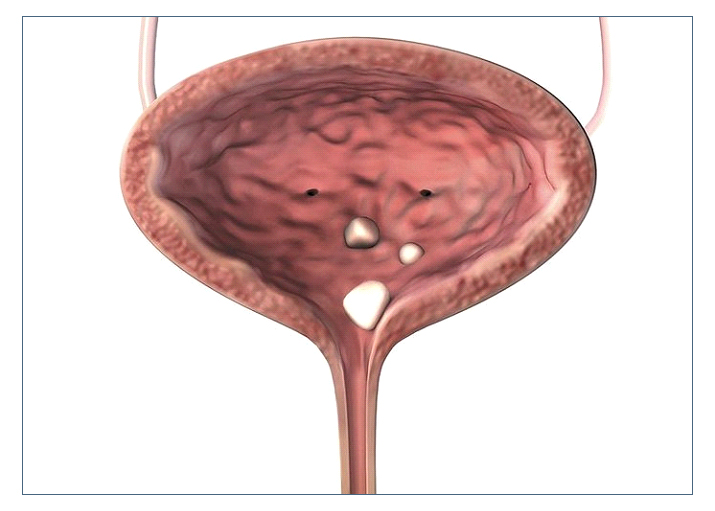
Görsel: Urinary Calculus
If bladder emptying is insufficient due to conditions such as benign prostatic hyperplasia, prostate cancer, or neurogenic bladder, and residual urine remains after urination, bladder stones may develop. In addition, infections that occur in the bladder can also lead to stone formation.
Mesane Taşı Nedir Ve Neden oluşur ?
Normalde mesane taşları oluşmaz. İdrarda taş oluşumunu engelleyen sitrat gibi bazı maddeler vardır. Ancak, dengelenmiş materyallerin terkibindeki değişikliklere bağlı olarak mesane taşı oluşabilir. Böbrekten ve üreterden gelen küçük taşların çekirdek oluşturup büyümesi neticesi de mesanede taşlar oluşabilir.
Görsel: Mesane Taşı
Mesane boşaltımı iyi huylu prostat büyümesi, prostat kanseri, nörojen mesane gibi durumlara bağlı olarak yetersiz ise ve idrar yaptıktan sonra rezidü idrar kalıyorsa mesane taşı oluşabilir. Ayrıca mesnede oluşan infeksiyonlara bağlı oluşabilmektedir.
Belirtileri Telerdir ?
Mesane taşı belirtileri arasında taşların idrar çıkışını tıkamasıyla hastanın idrar yapmakta zorlanması, tazyik düşer, idrarda kanamalar, sık idrara çıkma olabilir.
Nasıl Tanı Konulur ?
Mesane taşı tanısı koymak için öncelikle geçirdiği hastalıklar, geçirdiği ameliyatlar, mevcut ilave hastalıklarını içeren tıbbi geçmiş alınır ve ayrıntılı fizik muayene yapılır. Fizik muayenede alt karın bölgesine bastırıldığında hassasiyet olur. Taşı görüntülemek için röntgen, ultrasonografi yapılabilir. Gereğinde bilgisayarlı tomografiden kaçınmamak gerekir. Hasta erkek ise iyi huylu prostat büyümesinin varlığı araştırılmalıdır. Ayrıca eşlik eden nörojen mesane, metabolik hastalıklar olup olmadığı araştırılmalıdır.
Nasıl Tedavi Edilir ?
Mesanede taş tespit edildikten sonra taşın boyutu, sayısı, altta yatan hastalıklar tespit edilmeli ve tedavi alternatifleri tartışılmalıdır. Mesane taşı tedavisi yapılırken eğer taş böbrek ve üreter borucuklarından gelmiş ise hasta bu taşı düşürebilir ve bu karakterdeki taşların düşmesi beklenebilir. Ancak daha büyük taşların mesanaden alınması gerekir.
Asıl taşa neden olan faktörler var ise bunlar ortadan kaldırılmalıdır. Mesane taşı küçük ise üretradan kameralı sistoskop ile girilerek lazer ya da diğer aletlerle kapalı yöntemle kırılıp alınabilir. 3 cm den büyük birden fazla taşlara perkutan sistolitotomi (PSL) yapılabilir ve başarı oranı %100 e yakındır. Gereğinde çok büyük taşlarda açık cerrahi de yapılabilir.