
Surgery Office

0543 333 33 34

Whatsapp & Mobile

0543 333 33 34

İletişim

Location Map

Comments & Opinions

Patient Opinions

Muayenehane

0322 503 80 70

Whatsapp & Mobile

0543 333 33 34

Yorumlar & Görüşler

Hasta Görüşleri

HoLEP

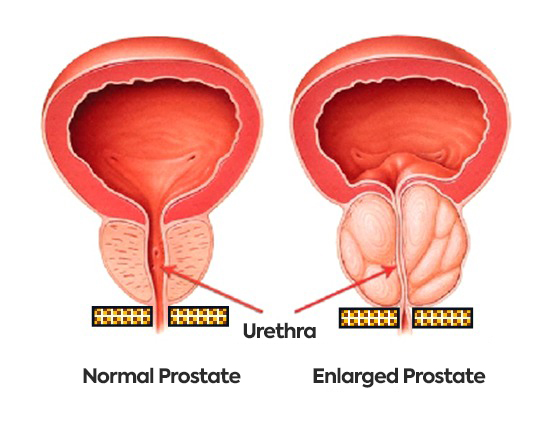
Benign Prostatic Hyperplasia (BPH)

BPH is a condition in which the prostate, which enlarges with age, blocks the bladder outlet and obstructs urine flow. Symptoms become more common and bothersome as men get older.

Surgical treatment is required if at least one of the following conditions is present. The goal of surgery is to remove the tissue that is blocking the urinary tract.

  • Persistent symptoms despite medication

  • Presence of bladder stones

  • Continuous bleeding caused by the prostate

  • Development of kidney failure due to prostate enlargement

  • Recurrent inability to urinate, requiring catheterization

  • Recurrent urinary tract infections


What Are the Surgical Options for Benign Prostatic Hyperplasia (BPH)?

The surgical treatment of prostate enlargement involves removing the part of the prostate that has grown and is blocking the urinary tract. There are several methods available for this procedure. With technological advancements, many different techniques have been developed. The important point is to determine which method will provide the best outcome for each patient.

  • TURP – Transurethral Resection of the Prostate

  • Plasmakinetic – Transurethral Bipolar Enucleation

  • HoLEP – Holmium Laser Enucleation of the Prostate

  • ThuLEP – Thulium Laser Enucleation of the Prostate

  • Greenlight – Laser Vaporization of the Prostate

  • Water Vapor Therapy (Steam Therapy)

  • Open Surgery

What Is HoLEP (Laser Prostate Surgery)?

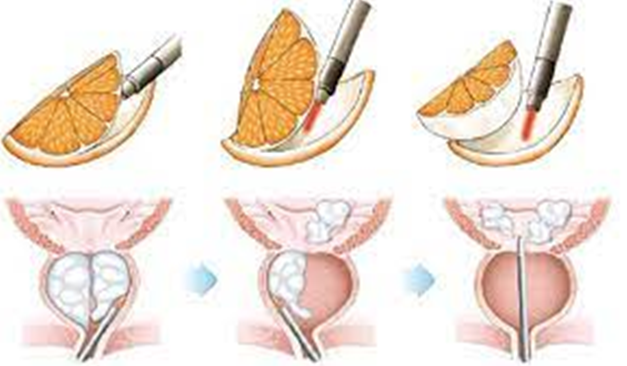
HoLEP is a minimally invasive (closed) prostate surgery technique. It involves using a laser to separate and remove the enlarged inner tissue of the prostate (adenoma) from its capsule.

Why the HoLEP Method?

According to the 2023 European Urology Guidelines, HoLEP is better established, has the highest level of evidence, and is strongly recommended compared to other laser techniques such as ThuLEP or KTP.

Thanks to its excellent outcomes, HoLEP has become increasingly popular and widely used today, and it is considered the gold standard treatment of the 21st century.

How Is Prostate Surgery Performed with HoLEP?

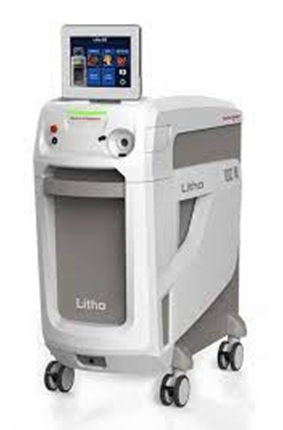
HoLEP prostate surgery can be performed under spinal anesthesia (numbing from the waist down). In this procedure, the enlarged prostate tissue is accessed through the natural urinary tract and separated from its capsule. The tissue that has been pushed into the bladder is then broken into small pieces with a special instrument and removed. Throughout the operation, a special laser device and laser probe are used.


What Are the Advantages of the HoLEP Method?

  • No risk of prostate tissue regrowth (recurrence)

  • Safe for patients using blood thinners

  • Low risk of bleeding

  • No burning sensation (dysuria) during urination

  • No expectation of erectile dysfunction

  • Catheters are removed in a very short time

  • Tissue specimens can be obtained for pathology

  • Short hospital stay

What Are the Risks of the HoLEP Method?

The risks associated with HoLEP surgery are quite rare, but may include:

  • Bleeding

  • Infection

  • Need to convert to open surgery

  • Risks related to anesthesia

Does the HoLEP Method Affect Sexual Function?

Around the prostate capsule, there are nerves responsible for regulating sexual function. Since the effect of the holmium laser on tissue is limited to only 0.4 mm, the deeper healthy tissues are not affected by the procedure. Therefore, erectile dysfunction is not expected after HoLEP prostate surgery.

Is Urinary Incontinence Possible After HoLEP Surgery?

Since HoLEP surgery is the technique that best preserves the sphincter muscles (which control urination), urinary incontinence is generally not seen.

However, if the sphincter has become weakened or sluggish due to previous inability to urinate or because of a very large prostate, small leakages may occur during the adaptation phase after the prostate is completely removed with HoLEP.

These minor leakages usually improve with medication and exercises—sometimes within a few days, and sometimes within 3 months. In rare cases, the recovery period may be longer.

Conclusion

With the advancement of laser technologies and the support of scientific research, HoLEP surgery has become an effective treatment method that can be safely applied to prostates of all sizes, with minimal side effects. As with any surgery, the experience of the surgeon and the medical team plays a crucial role in achieving success in HoLEP procedures.

Mesajınızı İletin

    ali şahin tasarım