



Adrenal Gland Diseases
Where Are the Adrenal Glands Located in the Human Body and What Is Their Function?
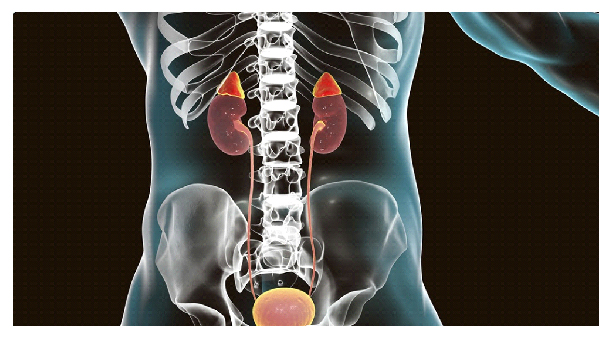
There are two adrenal glands in the human body, one located on each side, just above the kidneys. They are triangular in shape and measure approximately 2.5 to 3.5 cm in diameter. Each gland consists of two parts: a cortex (outer layer) and a medulla (inner section). In fact, these are two distinct organs with very different functions. The inner part secretes chemical substances known as adrenaline and noradrenaline. These substances are hormones released into the bloodstream.
What Are Adrenal Gland Diseases?
Adrenal Insufficiency (Addison’s Disease)
Cushing’s Syndrome
Pheochromocytoma
Incidentally Discovered Masses (Incidentaloma)
What Is Adrenal Insufficiency (Addison’s Disease) and What Are Its Symptoms?
Addison’s Disease occurs when the adrenal glands are damaged for some reason, leading to insufficient production of the hormone cortisol and, in some cases, inadequate levels of aldosterone in the body.
Addison’s Disease is a condition that presents with symptoms related to these hormonal changes.
Symptoms of Adrenal Insufficiency (Addison’s Disease)
Weight loss, nausea, vomiting, diarrhea
Headache, excessive sweating
Changes in blood pressure and heart rate
Memory impairment, confusion
Extreme fatigue, exhaustion, muscle weakness
Skin darkening and pigmentation (patches)
Sluggishness, lethargic movements, sleep disturbances
Involuntary abnormal movements in the eyelids
How Is Adrenal Insufficiency (Addison’s Disease) Treated?
In Addison’s disease, lifelong corticosteroid replacement therapy helps control the symptoms. Medication dosage should be increased during times of stress.
Many patients learn how to administer emergency hydrocortisone injections on their own in stressful situations. It is very important for patients to carry a medical identification card that lists the emergency medications and dosages to be used when necessary.
Patients should never skip their medication. If side effects such as vomiting or weight gain occur, they must inform their doctor immediately.
What Is Cushing’s Syndrome and What Are Its Symptoms?
Cushing’s syndrome is a disease characterized by symptoms that occur when excessive amounts of glucocorticoid hormones, secreted by the cortex of the adrenal gland, enter the bloodstream.
This excess may result either from overproduction of hormones in the adrenal glands or from the long-term use of steroid medications (cortisone) prescribed for the treatment of another condition.
Symptoms of Cushing’s Syndrome
After a period ranging from several months to years, the face becomes round and takes on a more reddish appearance (“moon face”).
Fat accumulation between and above the shoulders, resembling a hump (“buffalo hump”).
Stretch marks (striae) on the lower part of the trunk.
Fluid retention (edema).
Hypertension (high blood pressure).
Excessive hair growth (hirsutism).
Psychological disturbances (emotional instability).
Impotence in men or cessation of menstruation in women.
Osteoporosis (bone loss), especially in the spine and pelvis.
Onset of diabetes mellitus.
How Is Cushing’s Syndrome Treated?
If the symptoms occur due to medication, treatment involves discontinuing the drug or reducing its dosage.
If Cushing’s syndrome develops as a result of a tumor in the adrenal glands, pituitary gland, or liver that causes excessive hormone secretion, surgical removal of the tumor—or removal of the affected adrenal gland—may be the best treatment option.
What Is Pheochromocytoma and What Are Its Symptoms?
Pheochromocytoma is a usually non-cancerous (benign) tumor of the adrenal glands that causes excessive synthesis and release of adrenaline and noradrenaline.
How Is Pheochromocytoma Treated?
The disease is treated through surgical methods. Preoperative preparation, particularly the control of hypertension, is very important in these patients.
Incidentally Discovered Adrenal Masses (Incidentalomas)
Not all masses detected in the adrenal glands are hormonally active.
Masses that do not secrete hormones, called incidentalomas (incidentally discovered masses), may also be identified.
These masses are most often detected incidentally during imaging studies such as Computed Tomography (CT), Ultrasonography, or Magnetic Resonance Imaging (MRI) performed for other reasons.
What Surgical Techniques Can Be Applied?
The disease can be treated using open surgery or minimally invasive (laparoscopic) surgery methods. With technological advancements and increased surgical experience over the last 20 years, the laparoscopic method has become more commonly used today. Thanks to this approach, patients can often be discharged just one day after the operation and return to normal life in a shorter period of time.
How Are These Masses (Incidentalomas) Treated?
These masses usually do not cause any symptoms. About 2% of adrenal masses smaller than 4 cm, and 25% of those larger than 6 cm, are malignant.
Masses larger than 3–4 cm are surgically removed due to the possibility of malignancy.
Masses smaller than 3–4 cm are monitored with computed tomography (CT) if they are hormonally inactive; if hormonally active, they are evaluated in coordination with endocrinology and surgically treated.
Mesajınızı İletin